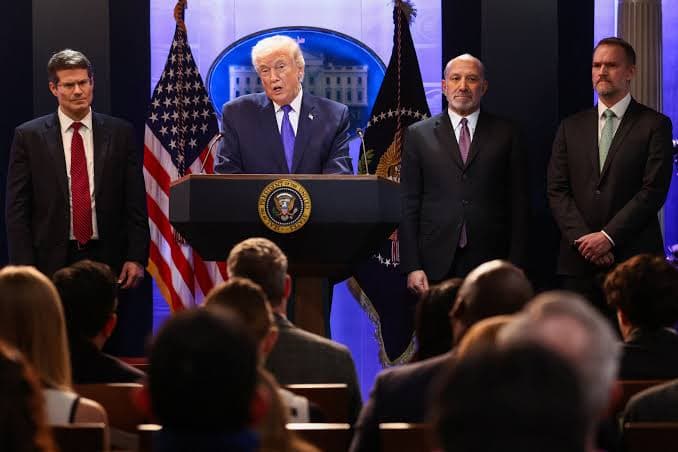
Breaking: A Friday Bombshell That Rocked Markets
In what may prove to be one of the most consequential Supreme Court decisions of the decade, the justices ruled 6-3 on Friday, February 21, 2026, that President Donald Trump violated federal law when he imposed sweeping tariffs across the globe. Chief Justice John Roberts wrote the majority opinion declaring that the International Emergency Economic Powers Act (IEEPA) "does not authorize the President to impose tariffs."
Markets immediately rallied on the news. According to CNBC, the S&P 500 gained 0.69% to close at 6,909.51, the Nasdaq surged 0.9% to 22,886.07, and the Dow Jones Industrial Average added 230 points to 49,625.97. Investors interpreted the ruling as removing a major source of economic uncertainty that has plagued global trade for over a year.
But the celebration was short-lived. Hours after the decision, President Trump defiantly announced a new 10% "global tariff" under different legal authority, ensuring that trade uncertainty would continue to roil markets and international relations. The rapid pivot demonstrated the administration's determination to maintain its signature economic policy despite the Supreme Court rebuke.
The Supreme Court Decision: A Major Constitutional Ruling
The Legal Reasoning
Chief Justice Roberts delivered a decisive opinion that struck at the heart of Trump's trade policy. "Based on two words separated by 16 others in IEEPA—'regulate' and 'importation'—the President asserts the independent power to impose tariffs on imports from any country, of any product, at any rate, for any amount of time," Roberts wrote. "Those words cannot bear such weight."
The Court emphasized several critical points:
• IEEPA contains no reference to "tariffs" or "duties" anywhere in its text
• No president before Trump had ever used IEEPA to impose tariffs
• The power to tax has historically been a core congressional authority under the Constitution
• To justify "extraordinary" tariff powers, Trump must point to "clear congressional authorization"—which he cannot
SCOTUSblog reported that Roberts also invoked the "major questions doctrine," which holds that Congress must explicitly authorize policies with major nationwide impact. The stakes of Trump's tariff policy—which the administration itself characterized as determining whether America becomes a "rich nation or a poor one"—clearly qualified as a major question requiring explicit congressional approval.
The Vote Breakdown
The 6-3 majority consisted of:
• Chief Justice John Roberts (author)
• Justice Sonia Sotomayor
• Justice Elena Kagan
• Justice Ketanji Brown Jackson
• Justice Neil Gorsuch (Trump appointee)
• Justice Amy Coney Barrett (Trump appointee)
Notably, two of the three dissenting justices—Clarence Thomas and Samuel Alito—were joined by Brett Kavanaugh, another Trump appointee. The fact that two Trump appointees voted against him while one dissented underscores the decision's basis in constitutional principles rather than partisan politics.
Kavanaugh's Dissent: A Roadmap for Trump
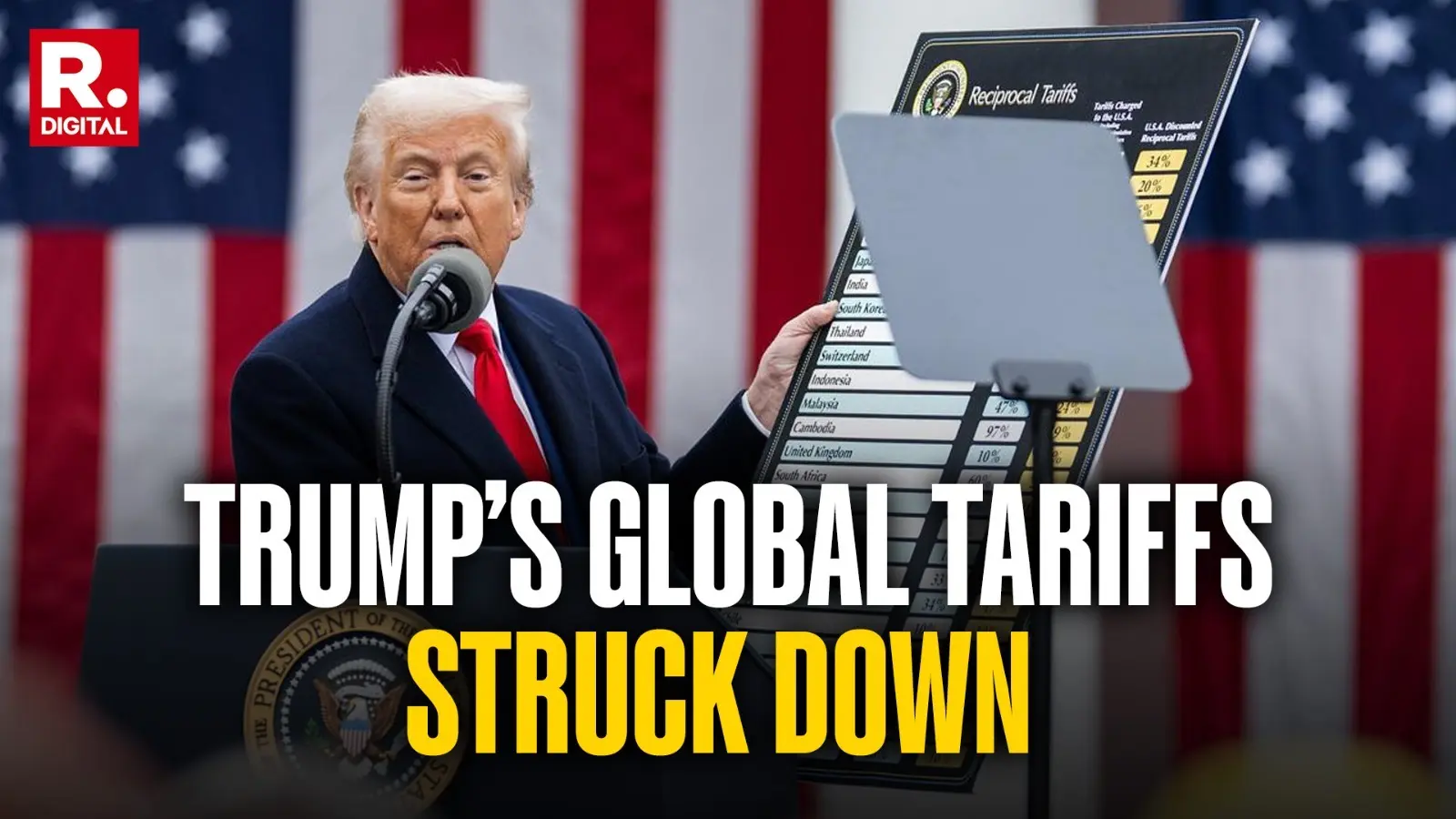
Justice Kavanaugh's dissent, while disagreeing with the majority, ironically provided Trump with a roadmap for continuing his tariff agenda. Kavanaugh argued that "the Court's decision might not substantially constrain a President's ability to order tariffs going forward" because "numerous other federal statutes authorize the President to impose tariffs."
He specifically listed alternative authorities:
• Section 232 of the Trade Expansion Act of 1962 (national security)
• Section 122 of the Trade Act of 1974 (balance of payments)
• Section 201 of the Trade Act of 1974 (import surges)
• Section 301 of the Trade Act of 1974 (unfair trade practices)
• Section 338 of the Tariff Act of 1930 (foreign discrimination)
Trump wasted no time following this roadmap.
Trump's Immediate Response: Defiance and New Tariffs
"A Disgrace to Our Nation"
President Trump received news of the ruling while meeting with governors at the White House Friday morning. After reading a note about the decision, he reportedly said aloud "that's a disgrace" before leaving the room shortly after.
CNN reported that at a subsequent press conference, Trump harshly criticized the justices who ruled against him, including the two he appointed. "The Supreme Court's ruling on tariffs is deeply disappointing, and I'm ashamed of certain members of the court, absolutely ashamed for not having the courage to do what's right for our country," Trump said.
In particularly inflammatory remarks, Trump described the majority justices as "very unpatriotic and disloyal to the Constitution" and suggested they were "swayed by foreign interests." He singled out Justices Gorsuch and Barrett, whom he appointed, calling the decision "a disgrace to our nation."
The New 10% Global Tariff
Hours after the ruling, Trump announced on Truth Social: "It is my Great Honor to have just signed, from the Oval Office, a Global 10% Tariff on all Countries, which will be effective almost immediately."
The new tariff relies on Section 122 of the Trade Act of 1974, which allows the president to impose temporary import surcharges of up to 15% for 150 days to address balance-of-payments deficits or prevent dollar depreciation. According to the White House fact sheet, the 10% duty will take effect on Tuesday, February 24 at 12:01 a.m. EST.
This marks the first time any U.S. president has invoked Section 122 authority to impose tariffs. The provision was enacted after President Nixon declared a goal of improving the balance of payments, giving presidents emergency authority to prevent dollar depreciation and correct trade imbalances.
Section 122: A Temporary Solution with Major Constraints
The 150-Day Limit
Unlike IEEPA, which had no time limit, Section 122 tariffs can last only 150 days without congressional approval. Axios analysis notes this creates significant uncertainty: after those five months expire, Trump will need Congress to extend the tariffs—a prospect that faces uncertain prospects given Republican divisions over trade policy.
When asked about the time limit at his press briefing, Trump claimed "we have the right to do pretty much what we want to do." This assertion is legally dubious. Section 122 explicitly requires congressional approval to extend tariffs beyond 150 days, and the Constitution clearly grants Congress—not the president—the power to levy taxes, including tariffs.
What's Covered, What's Not
The new 10% global tariff includes several important exemptions:
• USMCA-compliant goods from Canada and Mexico
• Products already subject to Section 232 (national security) tariffs
• Products already subject to Section 301 (unfair trade practices) tariffs
• Critical minerals needed by the US
• Energy products
• Pharmaceuticals
• Textiles and apparel from CAFTA-DR countries
Importantly, existing tariffs under Section 232 and Section 301 remain fully in effect. These include 25% tariffs on steel and aluminum, 25% tariffs on certain semiconductors (including Nvidia H200 chips), 25% tariffs on trucks, 50% tariffs on semi-finished copper products, and various automotive tariffs.
The Financial Stakes: Over $175 Billion in Refunds Owed
The Penn Wharton Budget Model estimates that the government has collected more than $175 billion in tariffs under IEEPA since Trump began imposing them in 2025. Legal precedent clearly establishes that these funds must be refunded to the importers who paid them.
The Supreme Court ruling was silent on the mechanics of how refunds will be processed, but Justice Kavanaugh warned in his dissent that the refund process "is likely to be a 'mess.'" Some importers will need to file petitions with Customs and Border Protection, while others may need to go to court to recover their payments.
For businesses that paid the tariffs, the prospect of refunds offers significant relief. Victor Schwartz, who runs New York-based wine and spirits importer VOS Selections, said in a statement: "These new tariffs were arbitrary, unpredictable, and bad business. Thankfully, courts at every level recognized these duties for what they were: unconstitutional government overreach."
Market Reaction: Relief Rally Despite Continued Uncertainty
Why Markets Rallied
Despite Trump's immediate imposition of new tariffs, markets rallied strongly on Friday. The positive reaction reflected several factors:
Certainty Over Chaos: The Supreme Court ruling provides legal certainty about the limits of presidential tariff authority. Markets prefer knowing the boundaries of executive power, even if they don't like the policies within those boundaries.
Lower Overall Tariff Rates: For many countries, the new 10% global tariff represents a reduction from the "reciprocal" tariffs they faced under IEEPA. India, for example, faced 50% IEEPA tariffs; Brazil faced similar rates. The shift to 10% across-the-board represents meaningful relief.
Reduced Revenue Impact on Fiscal Policy: The administration had counted on IEEPA tariffs to offset the massive tax cuts in the "One Big Beautiful Bill Act." Those tariffs were projected to bring in nearly $1.4 trillion over a decade. The new Section 122 tariffs, according to the Tax Foundation, would raise only about $800 billion over a decade—a significant shortfall that may force fiscal adjustments.
Prospect of Congressional Check: The 150-day time limit on Section 122 tariffs means Congress will have a say in whether they continue. This restores some of the constitutional balance that had been disrupted by unilateral presidential tariff authority.
Industry Responses
Business groups generally welcomed the ruling while expressing caution about the new tariffs:
The Footwear Distributors and Retailers of America called the ruling "an important step toward creating a more predictable and competitive environment for American businesses and consumers." Matt Priest, the group's president and CEO, said "This ruling provides relief at a time when cost pressures have been significant."
However, uncertainty remains. A steel company director in Toronto told CBC that while the ruling offered "common sense relief," Trump's new tariff order was "a reminder that the uncertainty isn't going away anytime soon."
The Administration's Plan B: Multiple Tariff Authorities
Maintaining Revenue Through Alternative Laws
Treasury Secretary Scott Bessent, speaking at the Economic Club of Dallas shortly after Trump's announcement, said the administration will use "a number of other existing tariff laws" to replace the struck-down IEEPA tariffs. "Treasury's estimates show that the use of Section 122 authority, combined with potentially enhanced Section 232 and Section 301 tariffs, will result in virtually unchanged tariff revenue in 2026," Bessent claimed.
This assertion is optimistic. Each alternative tariff authority comes with constraints:
Section 232 (National Security): Requires Commerce Department investigations finding that imports threaten national security. The Trump administration has launched a dozen such investigations covering major import sectors, but these take time and face legal challenges about whether civilian products genuinely threaten security.
Section 301 (Unfair Trade Practices): Requires the US Trade Representative to investigate whether countries engage in unfair trade practices. Trump announced "several" new Section 301 investigations on Friday, but each requires evidence gathering, public comment periods, and formal findings before tariffs can be imposed.
Section 338 (Foreign Discrimination): Allows tariffs on goods from countries that discriminate against US commerce, but requires specific findings of discrimination for each country and product.
The Congressional Wild Card
Trump's allies in Congress have suggested they could codify the tariffs through budget reconciliation—a fast-track process requiring only 50 Senate votes rather than the normal 60-vote threshold. However, TIME magazine reports that Republicans are deeply divided over the tariffs' scope and economic impact.
The Senate has already voted to rebuke Trump's tariffs on Canada, signaling that even Republican senators from agricultural and manufacturing states have concerns about the trade policy's impact on their constituents. Democrats, meanwhile, are uniformly opposed to codifying the tariffs.
When asked if he would request Congress to act on tariffs, Trump said Friday he doesn't need to, insisting he has sufficient executive authority. This sets up a potential constitutional confrontation if Trump tries to extend Section 122 tariffs beyond 150 days without congressional approval.
International Implications
Winners and Losers in the New Regime
The shift from IEEPA to Section 122 creates complex winners and losers among US trading partners:
Relative Winners:
• Countries that faced high "reciprocal" tariffs: India (was 50%, now 10%), Brazil (was 50%, now 10%), and the European Union (had agreed to 15%, now 10%)
• Canada and Mexico: USMCA-compliant goods exempt from the new 10% tariff
• Countries with trade agreements: Nations that negotiated lower rates may find those agreements nullified, potentially improving their position
Relative Losers:
• China: Faced two sets of 10% IEEPA tariffs plus 25% Section 301 tariffs. Now faces 10% Section 122 tariff plus the existing 25%, for a total of 35%—actually higher than before in some cases
• Countries that made concessions: Nations that agreed to investment commitments or trade concessions in exchange for lower IEEPA tariffs may feel deceived if those deals are unwound
South Korea Scrambles
South Korean government ministers scheduled an emergency inter-ministerial meeting Saturday afternoon to review the Supreme Court ruling and Trump's new executive order. The Foreign Ministry said it would "comprehensively review the content of the US Supreme Court's ruling and the position of the US government" to "examine its future response plans in a direction that best serves the national interest."
Seoul faces particular uncertainty because Trump had threatened to raise tariffs on South Korean goods after a July trade agreement remained unratified. The Supreme Court ruling and subsequent tariff shuffle leaves Korea unclear about which tariffs apply to its exports.
What Happens Next: Legal, Political, and Economic Battles
Immediate Implementation Steps
The Council on Foreign Relations outlines what must happen in coming days and weeks:
1. Stop Collecting IEEPA Tariffs: Customs and Border Protection must receive instructions to immediately stop collecting tariffs imposed under IEEPA. This should happen within days.
2. Begin Collecting Section 122 Tariffs: Starting February 24, CBP will collect the new 10% global tariff on applicable imports.
3. Process Refund Claims: Importers will begin filing petitions for refunds of the $175+ billion in IEEPA tariffs they paid. This process could take months or years to fully resolve.
4. Launch Section 301 Investigations: USTR will open multiple investigations into alleged unfair trade practices by various countries, aiming to justify new tariffs before the Section 122 window closes.
5. Expand Section 232 Coverage: The Commerce Department will likely rush to complete pending national security investigations to impose new tariffs under that authority.
Potential Legal Challenges
While the Supreme Court ruling settles the IEEPA question, Trump's new tariffs face potential legal challenges:
Section 122 Requirements: The statute requires findings of "large and serious" balance-of-payments deficits to prevent "imminent" and "significant" dollar depreciation. Challengers may argue these conditions don't exist, particularly given that the dollar recently hit four-year lows without the tariffs.
Time Limit Enforcement: If Trump attempts to extend Section 122 tariffs beyond 150 days without congressional approval, lawsuits will certainly follow.
Section 232 Overreach: Critics argue that many products subject to "national security" tariffs—like automobiles and wood products—don't genuinely threaten security. Courts may scrutinize whether these findings are pretextual.
Political Ramifications
The Supreme Court ruling represents a rare and significant defeat for Trump at a Court with a 6-3 conservative majority. CNN Supreme Court analyst Steve Vladeck noted that while the Court has granted the Trump administration emergency relief in dozens of cases, "the court is still willing to assert itself when these cases reach the merits."
For Democrats, the ruling provides vindication. House Budget Committee ranking member Brendan Boyle called it "a victory for every American family paying higher prices because of Trump's tariff taxes." House Ways and Means Committee ranking member Richard Neal described it as "a victory for the American people, the rule of law, and our standing in the global economy."
Republicans face a dilemma. Many support Trump's tough stance on China but worry about tariffs' impact on farmers, manufacturers, and consumers in their districts. The ruling forces them to decide whether to codify Trump's tariffs legislatively—a vote that will have clear political consequences.
Economic Impact Going Forward
Inflation Implications
The tariff uncertainty complicates the Federal Reserve's inflation fight. If the lower Section 122 tariffs reduce import costs, that could help moderate inflation. However, the ongoing threat of new tariffs under Section 232 and 301 keeps businesses uncertain about future costs, potentially leading them to raise prices preemptively.
Consumers have already felt tariffs' impact. Prices for furniture, automobiles, electronics, and other imported goods have risen significantly. The refund of IEEPA tariffs may eventually translate to lower prices, but importers may pocket some of the savings rather than passing them through to consumers.
Trade Deficit Impact
Despite Trump's aggressive tariffs throughout 2025, the US trade deficit totaled $901 billion—barely budging from previous years. This suggests tariffs alone cannot "fix" trade imbalances, which primarily reflect macroeconomic factors like savings rates, investment levels, and currency valuations.
The Supreme Court ruling essentially forces a test of whether alternative tariff authorities can achieve the administration's trade goals. If Section 122, 232, and 301 tariffs prove insufficient to reduce the deficit, it may vindicate critics who argue tariffs are the wrong tool for addressing trade imbalances.
Fiscal Policy Complications
The tariff revenue shortfall creates a significant fiscal problem. The "One Big Beautiful Bill Act" that Trump signed into law assumed IEEPA tariffs would offset a hefty portion of its massive tax cuts. With only Section 122 and other limited authorities available, the revenue gap could exceed $600 billion over a decade.
This may force difficult choices: accept higher deficits, scale back tax cuts, find new revenue sources, or cut spending. Each option carries political risks, particularly as the 2026 midterm elections approach.
Conclusion: A Turning Point in Trade Policy
The Supreme Court's February 21, 2026 ruling striking down Trump's IEEPA tariffs represents a watershed moment in American trade policy and presidential power. The 6-3 decision reaffirms that the power to tax—including through tariffs—ultimately rests with Congress, not the president.
Markets rallied on the news, interpreting the ruling as removing a major source of economic uncertainty despite Trump's immediate announcement of new 10% global tariffs under Section 122. The positive reaction reflects investors' preference for predictable, legally constrained policies over unilateral executive actions with unlimited scope.
Trump's rapid pivot to alternative tariff authorities demonstrates his unwavering commitment to protectionist trade policy. However, each alternative comes with meaningful constraints—time limits, procedural requirements, or specific findings that can be challenged in court. The era of unlimited presidential tariff authority appears to have ended.
In the short term, expect:
• Continued market volatility as businesses adjust to new tariff levels and uncertainty
• Aggressive administration efforts to impose new tariffs under Section 232 and 301 before the Section 122 window closes
• Legal battles over refunds totaling $175+ billion
• Political fights over whether Congress should codify Trump's tariffs
• International negotiations as countries seek clarity on which tariffs apply
The Friday bombshell may mark the beginning of the end for Trump's sweeping tariff regime, or it may prove to be merely a speed bump as the administration finds new legal avenues to pursue its trade agenda. One thing is certain: the uncertainty that has plagued global trade for over a year will continue for months to come.
As Chief Justice Roberts wrote, matters of this "economic and political significance" require clear congressional authorization. Friday's ruling returns some measure of constitutional balance to trade policy, even as the battle over America's economic future continues.
References and Further Reading
• Supreme Court Decision - SCOTUSblog
• CNN Politics - Tariff Ruling
• Council on Foreign Relations
Key SEO Keywords
Supreme Court tariffs ruling 2026, Trump tariffs struck down, IEEPA tariffs illegal, Section 122 global tariff, Trump 10% tariff, S&P 500 rally tariff ruling, Chief Justice Roberts tariff decision, Trump tariff refunds $175 billion, market reaction Supreme Court tariffs, Trade Act 1974 Section 122, presidential tariff authority limits, Trump Supreme Court loss, global trade uncertainty 2026