Financial markets do not move in straight lines. After strong rallies, pullbacks are normal and often healthy. This raises an important question many investors search for during volatility: what is a market correction, and what does it mean for your investments?
Understanding the meaning of a market correction, what causes it, and how investors should respond can help reduce panic and improve long-term decision-making.
What Is a Market Correction?
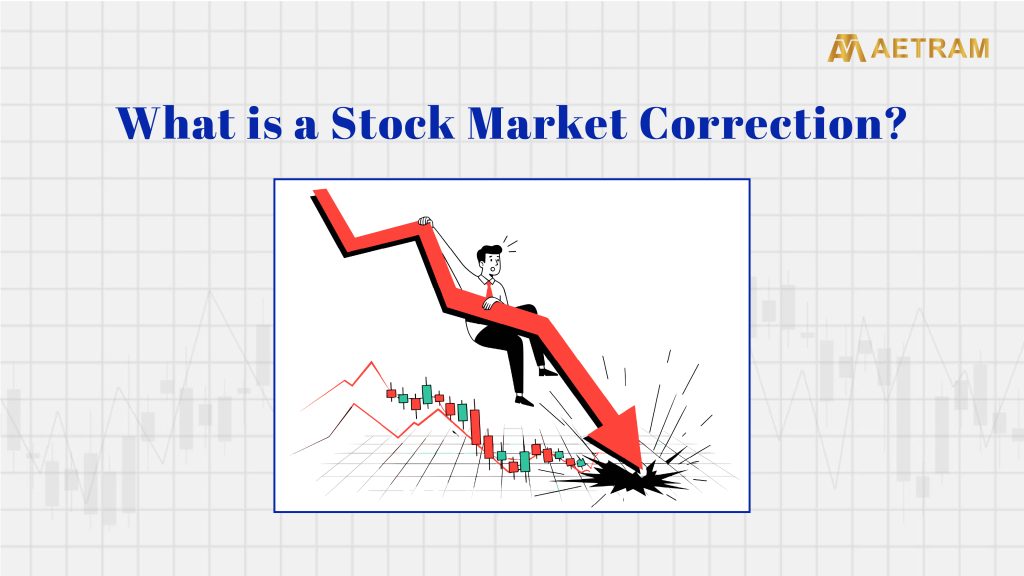
A market correction is generally defined as a decline of 10 percent or more from a recent peak in a stock index, sector, or individual stock.
According to the widely referenced definition provided by Investopedia’s explanation of market correction, a correction reflects a temporary price decline rather than a long-term bear market:
Corrections can happen in major indices like the S&P 500, Dow Jones, Nasdaq, or in specific sectors such as technology, banking, or commodities.
Unlike a bear market, which typically involves a decline of 20 percent or more, a correction is usually shorter in duration and often considered a normal part of market cycles.
Why Do Market Corrections Happen?
Investors frequently ask: what causes a market correction?
There are several common triggers.
Economic Data Surprises
Unexpected inflation spikes, weak employment reports, or slowing GDP growth can shift investor expectations. When economic data disappoints, markets may reprice quickly.
Official US economic indicators such as inflation reports can be reviewed through the Bureau of Labor Statistics CPI release page
Stronger-than-expected inflation often leads to correction fears because it may trigger tighter monetary policy.
Interest Rate Changes
Central banks play a major role in market direction. When the Federal Reserve or other central banks signal higher interest rates, borrowing costs increase and stock valuations can decline.
Investors monitor policy updates on the Federal Reserve monetary policy page
Higher rates typically pressure growth stocks and may accelerate correction phases.
Overvaluation and Profit-Taking
Sometimes corrections happen simply because markets have risen too far, too fast.
After extended rallies, investors begin locking in profits. When selling pressure increases, prices naturally pull back toward more sustainable levels.
This type of correction is often technical rather than fundamentally driven.
Geopolitical Events and Global Risks
Wars, trade tensions, energy supply disruptions, or financial crises can rapidly impact investor sentiment.
Global economic outlook updates, such as those published in the World Bank’s Global Economic Prospects report, highlight how macro risks influence markets worldwide
When uncertainty rises, risk appetite falls, leading to broad-based declines.
How Long Does a Market Correction Last?
There is no fixed timeline. Some corrections last a few weeks, while others extend for several months.
Historically, many corrections recover once economic clarity improves or central bank policy stabilizes. However, if underlying economic conditions worsen, a correction can evolve into a bear market.
Understanding the broader macro environment is essential before making major investment decisions.
How Should Investors Respond to a Market Correction?
One of the most searched questions during volatility is: how should investors respond to a market correction?
The first step is avoiding emotional decisions. Panic selling often locks in losses that could have been temporary.
Long-term investors typically benefit from reviewing their portfolio allocation rather than reacting impulsively. Diversification across sectors and asset classes can reduce risk during corrections.
Corrections can also create buying opportunities in fundamentally strong companies that temporarily decline in price.
Investors should reassess:
Risk tolerance
Investment horizon
Portfolio balance
Maintaining discipline during corrections is often more important than trying to time the exact bottom.
Is a Market Correction a Bad Sign?
Not necessarily.
Market corrections are a natural part of financial cycles. In fact, periodic pullbacks can help prevent larger bubbles from forming.
Healthy corrections reset valuations, reduce speculative excess, and create more stable foundations for future growth.
However, if corrections are driven by deep economic instability or systemic financial stress, they require closer monitoring.
Market Correction vs Bear Market
It is important to distinguish between a correction and a bear market.
A correction involves a 10 percent decline from recent highs.
A bear market typically involves a 20 percent or greater decline and longer-term economic weakness.
Recognizing this difference helps investors avoid overreacting during normal volatility.
Final Thoughts
So, what is a market correction?
It is a temporary decline of 10 percent or more from recent highs, often triggered by economic data, interest rate expectations, overvaluation, or global risks.
While corrections can be uncomfortable, they are a normal and recurring feature of financial markets. Investors who stay informed, diversified, and disciplined are generally better positioned to navigate volatility.
Understanding market correction meaning and causes empowers investors to make rational decisions instead of emotional ones.