NEW DELHI/WASHINGTON — When Finance Minister Nirmala Sitharaman presented India's Union Budget for fiscal year 2026-27 on February 1, she laid out the most ambitious economic blueprint yet for a nation racing to become the world's third-largest economy—and a critical partner for American businesses seeking alternatives to China.
With US-India bilateral trade approaching $200 billion annually and American companies from Apple to Boeing deepening their India commitments, this budget signals New Delhi's determination to capture a larger share of global supply chains at a moment when Washington is actively encouraging diversification away from Chinese manufacturing.
This wasn't just another budget. It was a strategic statement aimed squarely at Washington, Wall Street, and Silicon Valley.
US-India Economic Partnership: The Numbers Behind the Momentum
The timing of India's budget couldn't be more significant for US-India economic relations. Bilateral goods and services trade reached $191.8 billion in 2024, according to the US Trade Representative, making India America's ninth-largest trading partner. More importantly, the trajectory is sharply upward.
US exports to India hit $42.2 billion in 2024, while imports from India totaled $149.6 billion. But these raw numbers don't capture the strategic shift underway. American companies are increasingly viewing India not just as a market, but as a manufacturing base and innovation hub.
Apple now produces roughly 14% of its global iPhone output in India, with plans to increase that to 25% by 2027. Boeing sources $1 billion worth of components annually from Indian suppliers. Amazon has committed $26 billion in India investments through 2030. Google pledged $10 billion for digitization initiatives. These aren't symbolic gestures—they're billion-dollar bets on India's economic trajectory.
The 2026 budget directly addresses what American CEOs consistently cite as barriers to deeper engagement: infrastructure deficits, regulatory complexity, and supply chain reliability. In doing so, India is positioning itself as the democratic, stable alternative in the "China+1" strategies now mandatory in virtually every US boardroom.
Budget Highlights: The Numbers That Matter for US Investors
Let's cut through the political rhetoric and focus on the fiscal realities that will determine whether India can deliver on its promises.
India is targeting a fiscal deficit of 4.3% of GDP for the financial year 2026-27. For context, that's roughly in line with where the US deficit has hovered in recent "normal" years, and significantly better than most European economies post-pandemic. More importantly, it represents a continued downward trajectory from the COVID-era peaks of over 9%.
The capital expenditure allocation—the real meat of any development budget—has been bumped to approximately ₹12.2 lakh crore (roughly $145 billion at current exchange rates). That's not just a number; it's a 10% increase year-over-year in infrastructure spending at a time when most developed economies are cutting back.
Here's what strikes me after years of watching India: this government has learned the lesson that China absorbed in the 1990s and 2000s. You cannot become a major economic power without world-class infrastructure. And unlike previous Indian administrations that talked big but delivered small, this one seems to be actually building things.
Infrastructure: Building the Foundation for US-India Supply Chain Integration
The infrastructure allocation is the budget's centerpiece, and for American businesses evaluating Indian operations, it addresses the single biggest operational headache.
The ₹12.2 lakh crore ($145 billion) capital expenditure represents a 10% year-over-year increase and approximately 3.1% of GDP—a level comparable to China during its infrastructure boom years of 2005-2015.
Critical projects for US companies include:
- Dedicated Freight Corridors: The Eastern and Western Freight Corridors will reduce logistics time between manufacturing hubs and ports by up to 40%, directly addressing the "India takes too long" complaint from supply chain managers.
- Port Modernization: The Sagarmala program receives continued funding to upgrade 200 ports, with specific focus on container handling capacity—critical for companies like Walmart and Amazon managing complex import/export operations.
- Industrial Corridor Development: The Delhi-Mumbai Industrial Corridor and Chennai-Bengaluru Industrial Corridor get fresh allocations, creating plug-and-play manufacturing zones with guaranteed power, water, and logistics connectivity.
For context: General Electric's locomotive manufacturing facility in Bihar was delayed by 18 months due to infrastructure gaps. Ford's exit from India in 2021 cited logistics costs 30% higher than comparable Asian markets. These are the problems this budget attempts to solve.
The US-India Strategic Partnership Forum (USISPF) has identified infrastructure as the primary bottleneck preventing deeper American investment. If even half these projects deliver on schedule, it fundamentally changes the manufacturing equation for US companies currently paying premium logistics costs.
Semiconductors and Advanced Manufacturing: Courting US Tech Giants
Here's where India's budget intersects most directly with American strategic interests and the CHIPS Act's $280 billion commitment to onshoring semiconductor production.
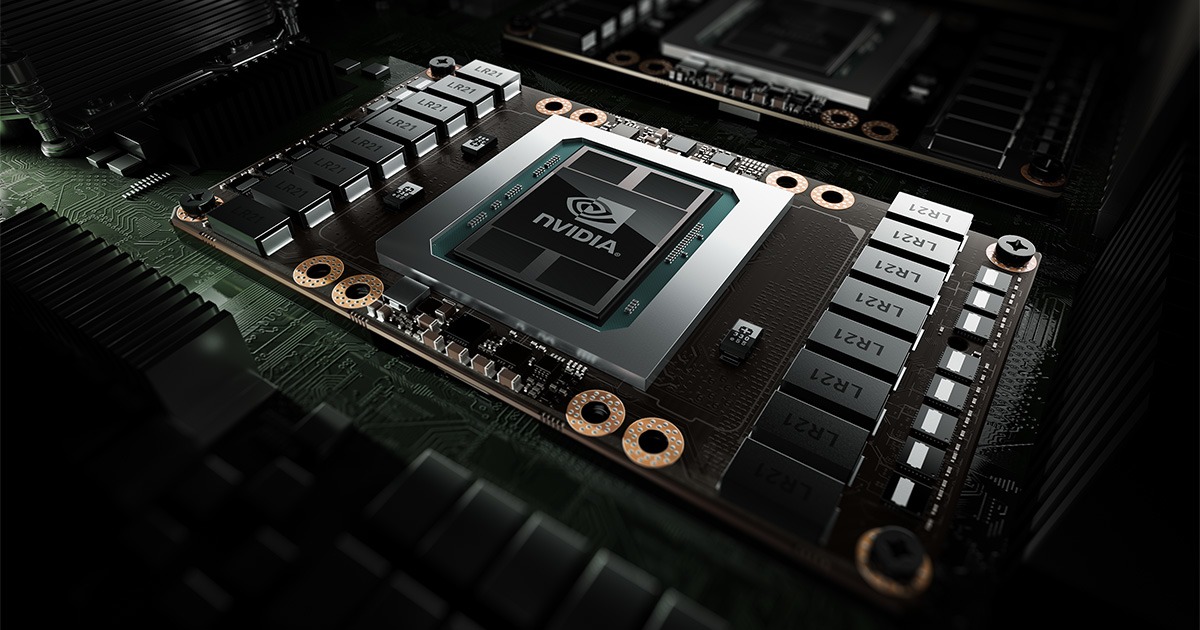
The India Semiconductor Mission 2.0 allocates ₹76,000 crore ($9.1 billion) for semiconductor manufacturing incentives, fabrication facilities, and design ecosystem development. This isn't happening in a vacuum—it's coordinated with the U.S.-India Initiative on Critical and Emerging Technology (iCET) launched in 2023.
Key developments for US semiconductor companies:
- Micron Technology is already investing $2.75 billion in a Gujarat assembly and test facility with $825 million in Indian government support. This budget expands similar incentives.
- Applied Materials is setting up a $400 million engineering center in Bengaluru, backed by government co-investment in R&D infrastructure.
- AMD and Qualcomm are expanding design centers, taking advantage of India's 20,000+ semiconductor design engineers—second only to the US globally.
The budget's semiconductor strategy dovetails with Washington's goal of diversifying chip supply chains away from Taiwan and China. India won't compete with Taiwan's advanced node production (3nm, 5nm), but it can capture mature node fabrication (28nm and above) and back-end assembly—exactly what the global supply chain needs for automotive, industrial, and consumer electronics.
More broadly, the Production-Linked Incentive (PLI) schemes get a ₹2.1 lakh crore ($25 billion) boost across 14 sectors including electronics manufacturing, pharmaceuticals, and electric vehicles. These are the sectors where US companies are actively diversifying supply chains.
Translation for CFOs: If you manufacture electronics, automotive components, or pharmaceuticals and you're looking at Vietnam, Mexico, or Thailand, India just made the economic case significantly more attractive. The PLI schemes offer 4-6% incentives on incremental sales of manufactured goods, which can swing location decisions for high-volume, moderate-margin products.
The MSME (Micro, Small, and Medium Enterprises) sector also gets a significant boost—₹3 lakh crore in credit guarantees and easier access to formal credit markets. This matters because in India, MSMEs employ over 110 million people. They're not just the backbone of the economy; they're the economy.
US angle: American retailers and manufacturers increasingly source from Indian MSMEs. Companies like Target, Home Depot, and Williams-Sonoma have established dedicated India sourcing offices. The credit expansion and formalization of MSMEs makes them more reliable suppliers—capable of meeting quality standards, delivery schedules, and compliance requirements that major US retailers demand. This directly supports the diversification strategies of American companies reducing China exposure in home goods, textiles, and light manufacturing.
The US-India Trade Imbalance: A Feature, Not a Bug
The $107.4 billion US trade deficit with India raises eyebrows in Washington, but the composition of that deficit tells an important story:
What the US imports from India:
- Pharmaceuticals and medical supplies: $9.8 billion (including 40% of US generic drugs)
- Precious stones and jewelry: $11.2 billion (mostly cut and polished diamonds)
- Machinery and equipment: $8.4 billion
- Textiles and apparel: $7.1 billion
- IT services and business outsourcing: $35+ billion (not fully captured in goods trade data)
What the US exports to India:
- Aircraft and aerospace: $3.8 billion
- Machinery and industrial equipment: $6.2 billion
- Medical devices: $2.1 billion
- Agricultural products (almonds, apples, soybeans): $2.8 billion
- Fossil fuels and LNG: $7.4 billion
The imbalance is largely in low-to-mid value manufacturing and services—sectors where US production has long since moved offshore. The emerging opportunity is in high-value manufacturing (semiconductors, aerospace, defense systems) where bilateral trade can balance and deepen.
This budget's semiconductor and defense manufacturing push is designed precisely to increase US exports to India (equipment, technology, components) while reducing the deficit in ways that benefit both economies.
Employment and Skills: Addressing the Demographic Dividend
India adds roughly 12 million people to its workforce every year. That's both an enormous opportunity and a ticking time bomb. If you can educate and employ them, you have a generational growth engine. If you can't, you have social instability.
The budget addresses this through what they're calling the "Yuvashakti" (Youth Power) initiative—a combination of skilling programs, apprenticeship incentives, and direct employment schemes. The allocation isn't trivial: over ₹2 lakh crore ($24 billion) spread across various programs.
For context, that's roughly equivalent to what Germany spends annually on its vaunted dual education system, but for a population 16 times larger. It's a start, but the scale of the challenge is immense.
What caught attention was the emphasis on sector-specific skilling—particularly in advanced manufacturing, renewable energy, and semiconductor design. This isn't about generic job training; it's about creating the workforce that the economy will need in 2030, not the one it needed in 2015.
For US companies, the availability of skilled labor matters enormously. India already has the world's second-largest pool of English-speaking STEM graduates (after the US). The budget's focus on advanced manufacturing skills, AI/ML training, and semiconductor design education directly addresses the talent needs of American companies establishing Indian operations.
Specific programs relevant to US businesses:
- Semiconductor Design Training: Partnership with US universities (MIT, Carnegie Mellon) to train 85,000 chip design engineers by 2028
- Advanced Manufacturing Apprenticeships: Co-developed with Boeing, GE, and Honeywell for aerospace and industrial sectors
- Clean Energy Technician Programs: Aligned with US solar and wind companies expanding Indian manufacturing
This isn't theoretical—the workforce quality delta between India's Tier-1 cities (Bengaluru, Hyderabad, Pune) and Tier-2/3 cities has been a persistent barrier to geographic diversification. These programs aim to bridge that gap.
Sector-Specific Opportunities for US Investors
Breaking down the budget by sector reveals specific opportunities for American capital and companies:
Financial Services
Budget allocation: Enhanced capital for public sector banks, digital payments infrastructure expansion
US opportunity: Private equity investments in fintech (already $10B+ deployed), partnerships with JP Morgan, Goldman Sachs on investment banking, potential opening of retail banking (long restricted)
Key metric to watch: Financial inclusion rate (currently 78%, target 95% by 2030)
Renewable Energy
Budget allocation: ₹35,000 crore for solar manufacturing PLI, ₹19,700 crore for transmission infrastructure
US opportunity: First Solar, SunPower partnerships on solar panel manufacturing; Tesla energy storage systems; GE Renewable Energy on wind turbine production
Key metric: India targets 500 GW renewable capacity by 2030 (currently 180 GW)
Healthcare and Pharmaceuticals
Budget allocation: ₹89,155 crore for health sector, incentives for medical device manufacturing
US opportunity: Contract manufacturing for generic drugs (India produces 40% of US generic drugs); medical device manufacturing partnerships (Abbott, Medtronic); telemedicine platform investments
Key metric: Medical device import substitution (currently 80% imported, target 50% by 2028)
E-commerce and Logistics
Budget allocation: Infrastructure for cold chain logistics, digital commerce facilitation
US opportunity: Amazon's $26B committed investment, Walmart-Flipkart expansion, logistics real estate (Prologis, Blackstone)
Key metric: E-commerce penetration (currently 8%, expected 18% by 2028)
Aerospace and Defense
Budget allocation: ₹6.21 lakh crore defense spending, ₹8,000 crore for joint development
US opportunity: Boeing India, Lockheed Martin partnerships, GE jet engine technology transfer, drone manufacturing
Key metric: Defense export target of $5 billion by 2028 (currently $2.2B)
Agriculture Technology
Budget allocation: ₹1.52 lakh crore for agriculture, emphasis on precision farming and value addition
US opportunity: John Deere smart farming equipment, Corteva crop science partnerships, Bayer precision agriculture
Key metric: Mechanization rate (currently 40%, target 60% by 2030)
Rural Economy and Agriculture: The Political Calculation
No Indian budget can ignore agriculture and rural development, which still employs about 42% of the workforce despite contributing only 18% of GDP. This is both an economic challenge and a political necessity in the world's largest democracy.
The 2026 budget significantly increases allocations for the Mahatma Gandhi National Rural Employment Guarantee Scheme (MGNREGS), rural road connectivity, and rural drinking water supply through the Jal Jeevan Mission. These aren't glamorous line items, but they're essential for social stability and for raising rural incomes—which, in turn, creates domestic consumption demand.
The agriculture section focuses on value-addition and export orientation rather than just production subsidies—a subtle but important shift. There are incentives for food processing, cold chain logistics, and organic farming certifications aimed at export markets.
From a macro perspective, this makes sense. India can't compete with Brazil or the US in bulk commodity production, but it can compete in high-value products: organic spices, specialty rice varieties, horticultural products. The budget is trying to nudge the sector in that direction.
Taxation and Trade: Easing Friction Points for US Businesses
Tax policy changes may seem technical, but they directly impact American companies' India operations and investment returns.
Key changes affecting US investors:
1. Foreign Portfolio Investment (FPI) reforms:
- Streamlined KYC requirements for US institutional investors
- Faster repatriation processes for dividends and capital gains
- Alignment with FATCA compliance to reduce duplicate reporting
2. Transfer Pricing Adjustments: The budget introduces safe harbor provisions for specific transactions with US parent companies, reducing protracted tax disputes that have plagued companies like Vodafone, Amazon India, and Google in previous years.
3. Customs Duty Rationalization:
- Reduced duties on critical manufacturing inputs for electronics (from 15% to 5%)
- Eliminated duties on certain clean energy components (solar inverters, battery packs)
- Maintained protective tariffs on finished goods to encourage local manufacturing
4. NRI Investment Limits Increased: Non-Resident Indians, including the 5.4 million Indian Americans (who control an estimated $600 billion in household wealth), can now invest up to ₹25 crore ($3 million) in Indian startups without prior approval—up from ₹10 crore.
Bilateral Trade Implications:
The budget supports ongoing negotiations for a US-India Trade Policy Forum agreement by removing several contentious tariff barriers:
- Medical devices: Import duties reduced from 7.5% to 5%
- Agricultural equipment: Specific exemptions for precision farming technology
- Defense components: Streamlined import procedures under the U.S.-India Defense Technology and Trade Initiative (DTTI)
These changes address longstanding US Chamber of Commerce complaints about market access barriers. While India maintains protectionist policies in some sectors (dairy, certain agriculture), the trajectory is toward greater openness—particularly in high-tech manufacturing where US companies have competitive advantages.
The Tax Dispute Cloud:
It's worth noting that India and the US still don't have a comprehensive tax treaty, and retrospective taxation remains a concern (though the government has largely abandoned this practice). The budget doesn't fully resolve these issues, but the directional movement is positive.
For US companies with significant India operations—like Mastercard, Cisco, and JPMorgan—these incremental tax reforms reduce friction costs that previously added 2-3% to effective tax rates through compliance complexity and dispute resolution.
Defense and Strategic Sectors: Deepening the US-India Partnership
Beyond economics, the budget reflects the deepening US-India strategic convergence, particularly in defense and critical technologies.
Defense allocation increased to ₹6.21 lakh crore ($74.4 billion), making India the world's third-largest military spender. More significantly, the budget mandates that 75% of defense procurement must come from domestic sources by 2030—up from 68% currently.
This creates opportunities for US defense contractors:
- Lockheed Martin and Boeing are already producing F-16 and Apache components in India under the Defense Technology and Trade Initiative (DTTI)
- General Electric is transferring F-414 jet engine technology to India—the first such transfer to a non-NATO ally
- Raytheon Technologies is establishing maintenance, repair, and overhaul (MRO) facilities for radar and missile systems
The budget allocates ₹8,000 crore specifically for defense technology co-development with "strategic partners"—a thinly veiled reference to the US, given the Quad framework and the U.S.-India Defense Acceleration Ecosystem (INDUS-X) initiative.
For American investors, defense partnerships open doors beyond military hardware. The spillover into aerospace, advanced materials, and cybersecurity creates commercial opportunities worth monitoring.
Technology Transfer and R&D: The Innovation Bridge
The budget's ₹1.2 lakh crore ($14.4 billion) allocation for research and development specifically targets areas where US-India collaboration is already strong:
Artificial Intelligence: Joint AI research initiatives under iCET, with participation from Google, Microsoft, and IBM Quantum Computing: Co-development programs involving US national labs and IIT-Madras Biotechnology: Vaccine development partnerships building on the COVID-19 collaboration model Clean Energy: Joint research on advanced battery technology, hydrogen fuel cells, and grid modernization
These aren't just government-to-government programs. The budget creates tax incentives (150% weighted deduction) for private R&D partnerships with US entities, making it financially attractive for American companies to establish research centers in India rather than just sales offices.
Real example: Microsoft's $5 billion India investment (announced January 2024) includes AI and cloud infrastructure specifically because of these R&D incentives. The 2026 budget extends and expands those benefits.
Near-Term Catalysts for US Investors
Looking at the next 12-18 months, several budget-related developments merit close attention:
Q2 2026:
- Semiconductor fabrication facility approvals expected (Micron, potential TSMC partnership)
- First tranche of infrastructure bonds issued for Delhi-Mumbai Industrial Corridor
Q3 2026:
- PLI scheme disbursements for electronics manufacturing (Apple, Samsung, Foxconn expansions)
- Defense procurement announcements under the new "strategic partnership" allocation
Q4 2026:
- US-India trade dialogue on critical minerals and rare earth elements
- Potential announcement of US-India bilateral investment treaty negotiations
2027:
- First production from semiconductor assembly facilities
- Completion of dedicated freight corridor eastern arm (coal and minerals transport)
- Operationalization of new international airports in tier-2 cities
These aren't speculative—they're projects with allocated funding, signed MOUs, and committed timelines. The question isn't whether they'll happen, but whether they'll happen on schedule (India's historical weak point) or with 6-12 month delays (more realistic expectation).
The Global Context: Positioning for a Multipolar World
Let's zoom out and look at this budget in the context of global economic realignment.
The world is fragmenting into economic blocs. The era of unfettered globalization is over. Supply chains are being redrawn along geopolitical lines. In this environment, India is positioning itself as the democratic alternative to China for manufacturing, as a critical swing state in technology standards battles, and as a massive consumption market that nobody can afford to ignore.
The 2026 budget reflects these geopolitical realities. The focus on semiconductor manufacturing isn't just industrial policy; it's strategic autonomy. The infrastructure spending isn't just about growth; it's about becoming an indispensable node in global supply chains. The skilling initiatives aren't just about employment; they're about competing for high-value activities in the global economy.
For American policymakers and investors, India's rise presents both opportunities and challenges. An economically strong, democratic India is clearly in US strategic interests. It's a counterweight to China, a partner in the Indo-Pacific, and a market opportunity. But it's also a competitor in manufacturing, technology, and increasingly, soft power.
The Execution Question
Here's the reality check: India has announced ambitious budgets before. The gap between announcement and execution has often been wide enough to drive a truck through.
Infrastructure projects get delayed by land acquisition disputes. Reforms get watered down in implementation. Schemes get captured by local political interests. Bureaucratic inertia is real.
The question for investors isn't whether this budget sounds good on paper—it does. The question is whether this administration can deliver. The track record over the past few years has actually been better than historical norms: infrastructure projects are being completed closer to schedule, the tax regime has become somewhat more predictable, and there's evidence of genuine institutional reform in areas like bankruptcy proceedings.
But India still ranks 63rd on the World Bank's Ease of Doing Business index (before the index was discontinued). It's still 40th on the Global Competitiveness Index. There's a long way to go.
Investment Outlook: What US Portfolio Managers Should Watch
For American investors evaluating India exposure—whether through direct investment, ETFs, or equity positions—this budget offers several concrete indicators to monitor:
Positive signals:
- ✅ Fiscal discipline maintained (4.3% deficit target vs. 5.1% in FY25)
- ✅ Infrastructure capex increased despite fiscal constraints
- ✅ Manufacturing incentives aligned with US supply chain diversification
- ✅ Tax reforms reduce friction for foreign investors
- ✅ Strategic alignment with US interests in semiconductors, defense, clean tech
Risk factors to monitor:
- ⚠️ Execution gaps on infrastructure (historical issue)
- ⚠️ State-level policy inconsistencies despite federal reforms
- ⚠️ Protectionist pressure in agriculture and low-skill manufacturing
- ⚠️ Regulatory unpredictability in digital sectors (recent restrictions on e-commerce)
Valuation considerations:
India's Nifty 50 index trades at approximately 21x forward P/E—a premium to the MSCI Emerging Markets index at 13x. This premium is justified if India delivers 6-7% real GDP growth (budget assumes 6.5-7%) and infrastructure/manufacturing reforms materialize.
For context: When China maintained 7-8% growth in the 2000s with comparable reforms, it sustained P/E premiums of 18-22x for over a decade. India's current valuation isn't unreasonable if execution matches ambition.
The US Policy Angle: Bipartisan Support for Deeper Ties
It's worth noting that US-India economic engagement enjoys rare bipartisan support in Washington. The Biden administration's emphasis on "friendshoring" and the previous Trump administration's "Indo-Pacific" pivot both elevated India as a strategic economic partner.
The U.S. International Development Finance Corporation (DFC) has committed up to $8 billion for Indian infrastructure projects. The Export-Import Bank of the United States (EXIM) reauthorized lending to India in 2023 after a pause. The Quad framework (US, India, Japan, Australia) explicitly includes supply chain resilience and technology sharing.
This budget positions India to capitalize on that American strategic interest. Whether it's semiconductors, clean energy, or defense manufacturing, India is offering what Washington wants: a democratic, English-speaking alternative to dependence on China.
Bottom Line: A Strategic Bet, Not a Tactical Trade
For US investors and companies, India's 2026 Union Budget should be viewed as part of a multi-year trajectory, not a single data point.
If you're a portfolio manager: India warrants a structural overweight in emerging market allocations, but with clear-eyed recognition that volatility will remain high and execution risk is real. Sector focus should be on infrastructure, financials benefiting from formalization, and advanced manufacturing.
If you're a corporate strategist: The "wait and see" approach to India is becoming costlier. First-mover advantages in manufacturing setup are real—securing land, workforce, and supply chain position takes 24-36 months. Companies that wait for perfect clarity will pay premium prices later.
If you're a policymaker: India is making the right strategic moves to position itself as America's partner in economic resilience. The question is whether US policy will reciprocate with market access, immigration reform for skilled workers, and genuine technology transfer—or whether we'll maintain protective barriers while asking India to open its markets.
India isn't trying to replicate China's export-led manufacturing model—its domestic market is too large and important. It's creating a hybrid model: manufacturing for domestic consumption first, exports second, with strategic sectors (semiconductors, defense) prioritized for self-reliance and partnership with trusted allies.
This budget is another chapter in that story. Whether it becomes a success story depends on execution over the next 2-3 years. But the direction is clear, the fiscal commitment is real, and the strategic alignment with US interests is stronger than ever.
For American capital allocators, that's enough to warrant serious attention.
Key Reference Links and Sources
Official Government Sources:
- India Union Budget 2026-27 Full Documents: indiabudget.gov.in
- Ministry of Finance Press Releases: pib.gov.in/Ministry/FinanceMinistry
- India Semiconductor Mission: semiconductors.gov.in
US-India Trade Data:
- US Trade Representative - India Trade Facts: ustr.gov/countries-regions/south-central-asia
- US Census Bureau - Trade in Goods with India: census.gov/foreign-trade/balance
- US-India Strategic Partnership Forum (USISPF): usispf.org
Bilateral Initiatives:
- U.S.-India Initiative on Critical and Emerging Technology (iCET): state.gov/u-s-india-initiative-on-critical-and-emerging-technology
- U.S.-India Defense Technology and Trade Initiative: defense.gov/News/Releases
- INDUS-X Defense Innovation Initiative: indusx.us
Investment and Economic Data:
- Reserve Bank of India Statistics: rbi.org.in
- National Stock Exchange of India (NSE): nseindia.com
- Securities and Exchange Board of India (SEBI): sebi.gov.in
- India Investment Grid (Infrastructure Projects): indiainvestmentgrid.gov.in
Corporate Announcements (Referenced):
- Apple India Manufacturing: apple.com/newsroom
- Micron Gujarat Facility Announcement: micron.com/about/our-innovation
- Microsoft AI Investment India: news.microsoft.com/en-in
Analysis and Research:
- McKinsey Global Institute - India Reports: mckinsey.com/mgi
- World Bank - India Overview: worldbank.org/en/country
- IMF India Economic Outlook: imf.org/en/Countries
US Government Resources:
- US Department of Commerce - India Country Commercial Guide: trade.gov/country-commercial-guides/india
- US International Development Finance Corporation (DFC): dfc.gov
- Export-Import Bank of the United States (EXIM): exim.gov
Disclaimer: This article is for informational purposes only and does not constitute investment advice. Readers should conduct their own due diligence and consult with financial advisors before making investment decisions. All figures are based on publicly available information as of February 2026 and exchange rates are approximate.