"Several Officials" Signal Two-Way Policy as Markets Push Rate Cut Expectations from June to July
Introduction: A Hawkish Wake-Up Call
The Federal Reserve delivered a sobering message to markets on Wednesday, February 18, 2026, when it released the minutes from its January 27-28 policy meeting. The document revealed a central bank increasingly wary of "sticky" inflation and willing—for the first time in months—to contemplate raising interest rates if price pressures refuse to moderate.
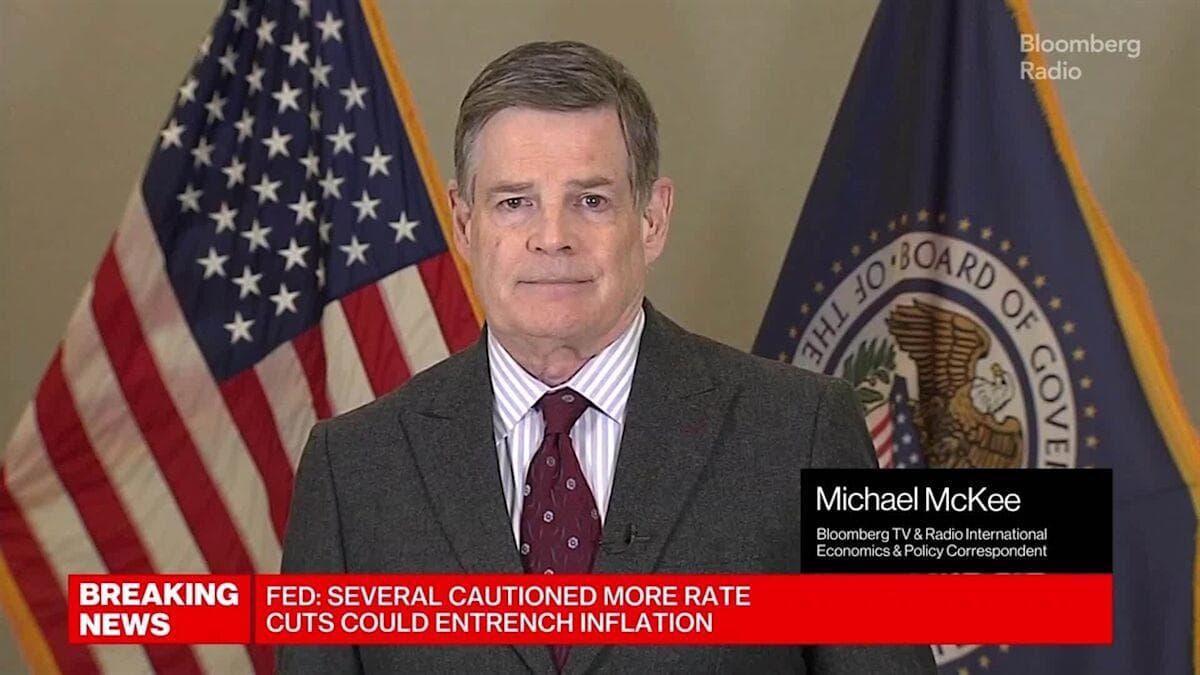
According to Bloomberg, "several" Fed officials suggested that the central bank may need to raise rates if inflation remains stubbornly high. While this fell short of indicating most officials were contemplating increases, it marked a decisive shift from the rate-cutting narrative that dominated late 2025.
Markets reacted swiftly. The dollar surged, Treasury yields climbed toward 4.1%, and rate cut expectations shifted dramatically. CME FedWatch data showed the probability of a March rate cut plummeting to just 6%, down from nearly 50% a month earlier. Expectations for the first 2026 cut moved from June to July, fundamentally recalibrating market positioning.
The "Hawkish Pause": What the Minutes Revealed
A Divided Committee
The January meeting produced a 10-2 vote to maintain the federal funds rate at 3.50%-3.75%, continuing the pause that began after three consecutive cuts totaling 75 basis points in late 2025. However, beneath this headline decision lay significant divisions about the path forward.
NBC News reported that "several participants" indicated a willingness to support language signaling the possibility of future rate hikes if inflation did not recede. This marks a dramatic departure from previous guidance that treated rate cuts as the only question—the only debate being when, not whether.
The minutes revealed that most officials thought the risk of the labor market weakening further "had moderated in recent months while the risk of more persistent inflation remained." Some went further, commenting that these risks "had come into better balance"—Fed-speak for suggesting that inflation now poses the greater threat than unemployment.
The Emergence of "Two-Sided" Guidance
The most significant development was the adoption of what analysts are calling "two-sided" guidance—language indicating the Fed could move rates either up or down depending on incoming data. This subtle but powerful shift puts rate hikes back on the table for the first time since the cutting cycle began.
According to market analysis, several officials suggested that "upward adjustments" to interest rates "could be appropriate" if inflation continues tracking above 2%—as it has for nearly five years. This hawkish tilt caught many investors off guard, as the prevailing narrative through late 2025 focused exclusively on the timing and pace of cuts.
The minutes noted that while most participants expect further rate reductions would be appropriate if inflation declines as expected, they emphasized the need for "greater confidence" before proceeding with cuts. The phrase "uneven" was used repeatedly to describe the disinflationary process, with particular concern about "sticky" core services inflation.
Why the Hawkish Shift? Understanding Inflation Persistence
The Inflation Picture
Bureau of Labor Statistics data released on Friday, February 21 showed overall inflation at 2.4% in January, down from 2.7% in December. While this represents progress, it remains stubbornly above the Fed's 2% target. More concerning to policymakers is core inflation—which excludes volatile food and energy prices—which has proven particularly resistant to moderating.
The inflation trajectory has been bumpy. In April 2025, overall inflation fell to 2.3%, raising hopes the Fed was near its goal. But prices surged as high as 3% in September before declining again. This volatility has made officials wary of declaring premature victory.
Services sector inflation remains particularly stubborn. Housing costs, healthcare, and other services continue rising at rates well above the overall inflation figure. Fed officials worry this reflects underlying demand pressures that could prove persistent, especially given the labor market's surprising resilience.
Economic Resilience Complicates the Picture
Adding to the Fed's inflation concerns is the economy's remarkable resilience. January employment data surprised to the upside with 130,000 jobs added, significantly beating the forecast of 70,000. The unemployment rate remains low, and consumer spending continues at healthy levels.
Several Fed participants highlighted what they called a "productivity miracle" driven by massive investments in artificial intelligence. This AI-powered productivity surge allows the economy to grow at a projected 2.2% in 2026 without necessarily stoking inflation, providing the Fed with an unusual buffer.
However, this very strength creates a dilemma. Chair Jerome Powell noted in the minutes that it is increasingly difficult to categorize the current 3.5%-3.75% rate range as "significantly restrictive" given the economy's performance. If rates aren't restrictive enough to cool demand and bring inflation to target, the Fed may need to raise them further—an outcome few had priced in.
The Debate Over "Neutral"
A central theme in the minutes was the debate over the "neutral" rate—the level at which interest rates neither stimulate nor restrict economic growth. Powell's suggestion that the current range may not be "significantly restrictive" implies the neutral rate may be higher than previously thought.
This represents a crucial shift. If the neutral rate is indeed higher—perhaps 3.5% or even 4% rather than the 2.5% many economists assumed—then current policy is closer to neutral than to restrictive. This would explain why inflation hasn't fallen faster and why the economy remains strong despite what seemed like aggressive tightening.
If this interpretation proves correct, the Fed may have reached what analysts call a "terminal plateau" rather than a peak that will give way to sustained cuts. Rates could remain near current levels for an extended period, with adjustments in either direction depending on inflation and employment data.
Market Reactions: Dollar Surges, Yields Climb
Treasury Market Response
The "higher for longer" narrative sent Treasury yields climbing. The 10-year yield, a critical benchmark for global borrowing costs, surged toward 4.10%, reaching levels not seen since late 2025 volatility. The 2-year yield, more sensitive to near-term Fed policy, rose to approximately 3.49%.
The weak demand for a $16 billion sale of 20-year bonds on the day of the minutes' release underscored investor caution. With the Fed signaling rates may stay higher for longer—or even rise—the risk of holding long-dated bonds at current yields has increased.
Dollar Strength
The dollar surged on the hawkish minutes, reversing some of its recent weakness. Currency markets had pushed the dollar to four-year lows earlier in February on expectations of aggressive Fed rate cuts. The minutes' hawkish tilt dramatically altered that narrative, supporting dollar strength as interest rate differentials with other currencies narrowed.
As U.S. yields rise relative to other developed markets, the dollar becomes more attractive to international investors seeking yield. This creates a feedback loop where dollar strength can itself help moderate inflation by reducing import costs, potentially giving the Fed more room to pause or cut rates later.
Equity Market Impact
Stock markets showed relatively muted reactions despite the hawkish surprise, with futures posting modest gains. This suggests investors are parsing nuanced signals rather than reacting with panic.
However, sector rotation accelerated. Growth stocks, particularly in technology, faced downward pressure as the cost of capital rose. Mega-cap tech companies with strong balance sheets and cash generation proved more resilient, while smaller, unprofitable growth companies suffered.
Defensive sectors like utilities and consumer staples attracted flows as investors positioned for a higher-rate environment. Financials initially rallied on higher yield expectations before giving back gains on concerns about loan demand.
Political Pressure: Fed Independence Under Fire
Trump's Rate Cut Campaign
The minutes were released amid intense political friction. President Trump has repeatedly and publicly advocated for the Fed to slash rates to as low as 1%, arguing that cheaper money would spur economic growth and benefit American workers.
Trump's multipronged pressure campaign culminated in late 2025 when his administration served subpoenas to the Fed related to its headquarters renovation—a move widely interpreted as political intimidation. Despite this pressure, the January minutes suggest the Fed's internal deliberations remain focused on its dual mandate of price stability and maximum employment rather than political considerations.
The Warsh Factor
Adding complexity to the picture is Trump's nomination of Kevin Warsh to succeed Jerome Powell as Fed Chair when Powell's term expires in May 2026. Warsh has spoken favorably about lower interest rates over the past year, a position aligned with Trump's preferences.
However, Warsh is also a serious monetary economist with institutional respect for the Fed's independence. His confirmation hearings will be closely watched for signals about whether he would maintain the Powell Fed's inflation-first approach or pivot toward a more dovish stance accommodating White House preferences.
The transition from Powell to Warsh represents perhaps the most significant monetary policy uncertainty facing markets in coming months. If Warsh signals willingness to cut rates aggressively to support growth, markets could rally sharply. But this would risk reigniting the very inflation the Fed has spent years fighting.
Powell's Legacy Play
By maintaining a hawkish stance in his final months, Jerome Powell appears determined to cement a legacy of price stability. The minutes' emphasis on inflation risks over employment concerns suggests Powell wants to finish his term having brought inflation sustainably to 2%—even if that means resisting political pressure and market impatience.
This sets up a potential policy clash if Warsh takes a markedly different approach. Markets will be watching whether the incoming chair respects the groundwork Powell has laid or charts a new course.
What Comes Next: Key Catalysts to Watch
March 18 FOMC Meeting
CME FedWatch data shows a 94% probability that the Fed will hold rates steady at its March 18 meeting. The real question is what language the post-meeting statement and Powell's press conference will contain.
If Powell emphasizes the "two-sided" nature of risks and keeps rate hikes in play, markets will price in an even longer pause. If instead he pivots back toward a cutting bias, it could reignite rate cut expectations—though such a shift seems unlikely given the January minutes' tone.
February Inflation Data
The February CPI and PCE reports will be critical. Any evidence of reacceleration in services inflation would likely push rate cut expectations into late 2026 or even 2027. Conversely, a sharp decline could revive cut hopes for summer.
The Fed watches core PCE (Personal Consumption Expenditures) most closely. Analysts forecast the February report will show whether January's improvement represents a trend or a one-month aberration.
Labor Market Evolution
Employment data will remain crucial. If job growth continues surprising to the upside and wages accelerate, the Fed's inflation concerns will intensify. But if the labor market finally shows signs of softening, it could tip the balance toward cuts.
Particular attention will focus on labor force participation rates. If more workers return to the job market, it could ease wage pressures without requiring higher unemployment—an ideal outcome for the Fed.
Warsh Confirmation Process
Kevin Warsh's confirmation hearings before the Senate Banking Committee will provide crucial insights into the future direction of monetary policy. His testimony about the "terminal rate," inflation targets, and Fed independence will be the most closely watched financial event of spring 2026.
Investment Implications: Navigating the New Reality
Fixed Income Strategy
The "higher for longer" reality requires bond investors to recalibrate. Those positioned for aggressive rate cuts and falling yields face potential losses. A steeper yield curve may develop as long-term rates price in sustained inflation risks.
Short-duration bonds and floating-rate instruments look more attractive in an environment where rates might rise or stay elevated. Long-duration bonds carry increased risk unless investors believe inflation will sharply decelerate.
Equity Sector Selection
The era of "a rising tide lifts all boats" appears to be ending. Sector selection and balance sheet strength become paramount in a higher-rate environment:
• Favor mega-cap tech with strong cash generation that can earn high interest income on cash holdings
• Defensive sectors like utilities and consumer staples offer protection if growth slows
• Financials may benefit from sustained higher rates, though loan demand concerns persist
• Avoid highly leveraged companies and unprofitable growth stocks most vulnerable to higher capital costs
Corporate Strategy Adjustments
Companies waiting for lower rates to refinance debt may need to accept current levels as the "new normal." This could trigger:
• A wave of corporate restructuring to improve efficiency and reduce leverage
• Slower merger and acquisition activity as the cost of financing deals remains high
• Increased focus on cash generation and dividend sustainability over growth investments
• More conservative capital allocation favoring debt reduction over buybacks
Conclusion: The 2% Target Remains the North Star
The Fed's January minutes delivered an unambiguous message: the central bank will not declare victory over inflation prematurely. The emergence of "two-sided" guidance puts rate hikes back on the table for the first time since the cutting cycle began, fundamentally shifting the policy outlook.
Markets must now recalibrate for a "higher for longer" scenario, with the first rate cut pushed from June to July at the earliest—and potentially later if inflation proves sticky. The probability of a March cut has collapsed to just 6%, and even summer cuts are no longer certain.
This hawkish pivot reflects the Fed's growing concern that the final stretch to 2% inflation may be more difficult than hoped. Services sector inflation remains stubborn, the labor market shows surprising resilience, and the economy continues growing at a healthy pace despite what seemed like restrictive policy.
The Fed faces intense political pressure from the White House to cut rates, but the January minutes suggest policymakers remain focused on their dual mandate rather than political considerations. Jerome Powell appears determined to cement a legacy of price stability in his final months, even if it means resisting pressure and market impatience.
Looking ahead, the key question is whether the economy can continue its AI-powered productivity boom without reigniting inflation. If yes, the Fed may have achieved an unusual soft landing at a higher interest rate level than previously thought sustainable. If no, officials may face the difficult choice of raising rates to combat inflation or accepting higher prices to preserve growth.
For investors, the message is clear: active management, sector selection, and balance sheet quality matter more than ever. The easy money from indiscriminate buying is behind us. The Fed's hawkish shift marks a new phase where inflation remains the primary concern, rates stay elevated, and patience is required.
As we await the February inflation data, the March FOMC meeting, and Kevin Warsh's confirmation hearings, one thing is certain: the 2% inflation target remains the Fed's North Star, even if it remains frustratingly out of reach. Until that goal is achieved, don't expect the aggressive rate cuts many had hoped for.
References and Further Reading
• Federal Reserve Official Minutes
• Bloomberg - Fed Minutes Analysis
• NBC News - Fed Rate Discussion