The technology giant Nvidia has kicked off 2026 with groundbreaking announcements that signal a transformative shift in both artificial intelligence infrastructure and gaming technology. At CES 2026 in Las Vegas, CEO Jensen Huang unveiled the company's next-generation Rubin platform while simultaneously rolling out significant enhancements to its gaming technologies, positioning Nvidia at the forefront of both AI computation and interactive entertainment.
The Rubin Platform: A New Era in AI Computing
The centerpiece of Nvidia's announcements is the Rubin platform, which represents a fundamental reimagining of AI infrastructure. Unlike traditional incremental GPU upgrades, Rubin introduces an integrated six-chip architecture designed specifically for what Nvidia calls the "agentic AI era" where inference workloads and cost-per-token economics determine commercial viability.
Extreme Co-Design Philosophy
What sets Rubin apart is Nvidia's extreme co-design approach, where all six chips work in concert rather than as isolated components. The platform comprises the Vera CPU, Rubin GPU, NVLink 6 Switch, ConnectX-9 SuperNIC, BlueField-4 DPU, and Spectrum-6 Ethernet Switch. As Nvidia's technical blog explains, this integrated design treats the data center itself as the fundamental unit of compute, not individual GPU servers.
This architectural philosophy yields impressive efficiency gains. According to Nvidia's specifications, Rubin delivers up to a 10x reduction in inference token costs compared to the previous Blackwell platform, along with a 4x reduction in the number of GPUs required to train mixture-of-experts (MoE) models. For AI companies managing massive computing budgets, these improvements translate directly to bottom-line savings.
The Vera Rubin Superchip
At the heart of the platform sits the Vera Rubin superchip, which combines one Vera CPU with two Rubin GPUs in a single processor. The Rubin GPU itself features 288GB of HBM4 memory with 22 TB/sec of memory bandwidth—representing a substantial 2.75x improvement over Blackwell's memory bandwidth specifications.
The platform's flagship configuration, the Vera Rubin NVL72, combines 72 GPUs into a single rack-scale system. These massive installations are what tech giants like Microsoft, Google, Amazon, and Meta are investing billions to acquire for their AI infrastructure.
Production Timeline and Industry Adoption
Perhaps most surprising was Huang's announcement that Rubin has already entered full production—months ahead of industry expectations. Volume shipments are targeted for the second half of 2026, with major cloud providers including AWS, Google Cloud, Microsoft, and Oracle Cloud Infrastructure among the first to deploy Vera Rubin-based instances.
Microsoft has committed to deploying Vera Rubin NVL72 rack-scale systems as part of its next-generation Fairwater AI superfactory sites. Meanwhile, AI labs including Anthropic, OpenAI, Mistral AI, and xAI are looking to the platform for training larger models and serving long-context inference workloads.
Specialized Processing: The Rubin CPX
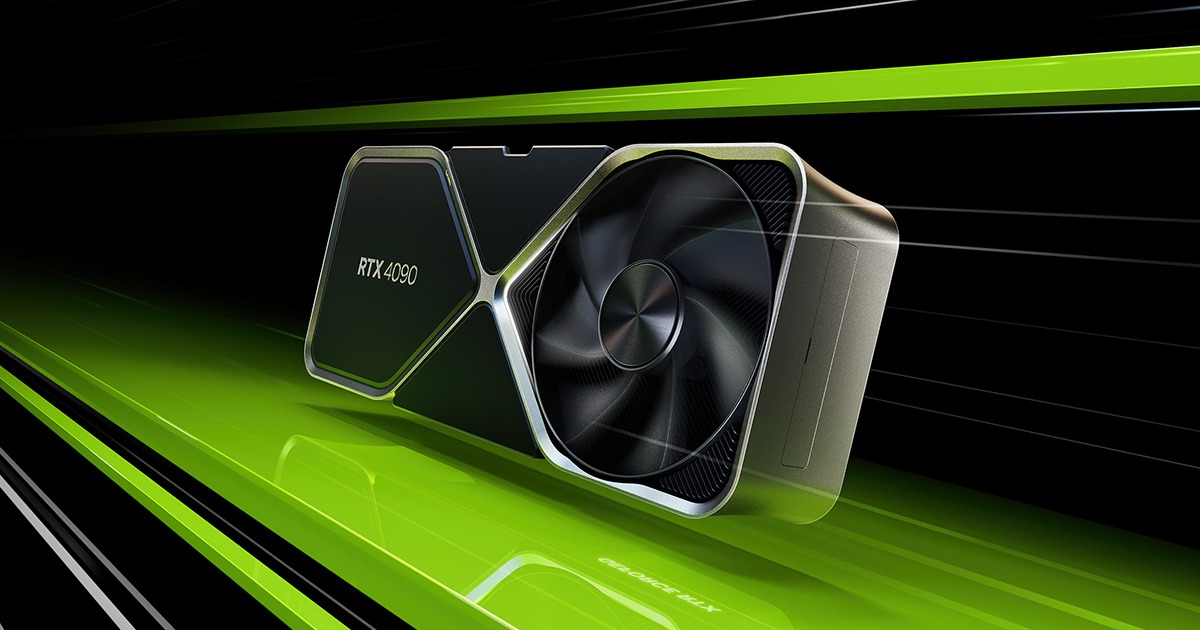
Nvidia didn't stop with the standard Rubin platform. The company also unveiled Rubin CPX, a new processor class purpose-built for massive-context processing. This specialized GPU enables AI systems to handle million-token software coding projects and generative video applications with unprecedented efficiency.
The Vera Rubin NVL144 CPX platform delivers 8 exaflops of AI performance and 100TB of fast memory in a single rack—providing 7.5x more AI performance than the previous GB300 NVL72 systems. Nvidia positions this as transformative for AI coding assistants, which can evolve from simple code-generation tools into sophisticated systems capable of understanding entire software architectures.
Gaming Innovation: DLSS 4.5 Raises the Bar
While the Rubin platform targets enterprise AI infrastructure, Nvidia hasn't forgotten its gaming roots. The company introduced DLSS 4.5 at CES 2026, representing a significant advancement in AI-powered gaming graphics.
Second-Generation Transformer Model
DLSS 4.5 Super Resolution introduces a second-generation transformer model that utilizes five times the compute power of the original transformer architecture. Trained on an expanded, high-fidelity dataset, this model demonstrates deeper scene understanding and more intelligent use of game engine pixel sampling and motion data.
The improvements manifest in several key areas. DLSS 4.5 addresses traditional challenges with lighting effects by operating directly in linear space rather than logarithmic space, allowing for physically accurate light accumulation. This means glowing neon signs and bright reflections retain their full color range and detail without the muted lighting and crushed shadows that plagued earlier techniques.
As detailed in Nvidia's announcement, the technology reduces shimmer on static surfaces, minimizes ghostly trails, and improves motion clarity—all critical factors for an immersive gaming experience.
Dynamic Multi Frame Generation
Beyond improved image quality, DLSS 4.5 introduces Dynamic Multi Frame Generation and a new 6X Multi Frame Generation mode (available Spring 2026). This technology can generate up to five additional frames per traditionally rendered frame, dynamically adjusting to match display refresh rates for smooth 240+ FPS, 4K path-traced gaming.
The adoption has been remarkable. Over 250 games and apps already support DLSS 4 with Multi Frame Generation, making it Nvidia's most rapidly adopted gaming technology. DLSS 4.5 Super Resolution extends support to over 400 games and apps, with major upcoming titles like 007 First Light, Phantom Blade Zero, and Resident Evil Requiem adding support at launch.
Accessibility and Performance Considerations
DLSS 4.5 Super Resolution is available now to all GeForce RTX GPU owners through the Nvidia app. However, there are performance considerations. While RTX 50 Series and 40 Series GPUs benefit from native FP8 support in their Tensor Cores, RTX 30 Series and 20 Series GPUs may experience up to 20% performance impact with the more computationally intensive second-generation model.
The Gaming GPU Drought
Not all news from Nvidia has been celebratory. Reports indicate the company doesn't plan to release new gaming GPUs in 2026 due to a global memory shortage. This would mark the first time in nearly three decades that Nvidia skips a year without a new gaming GPU launch, as the company prioritizes memory capacity for AI accelerators over consumer gaming products.
Autonomous Vehicle Intelligence
Rounding out the announcements, Nvidia introduced Alpamayo, a family of open-source reasoning models designed to guide autonomous vehicles through challenging driving situations. This represents Nvidia's continued push to bring AI capabilities into every domain, from data centers to vehicles.
Industry Implications
The Rubin platform's early production status has significant implications for the AI industry. As industry analysts note, Nvidia compressed what typically spans 24-30 months in semiconductor development into an aggressive 18-month cycle from Blackwell's launch to Rubin production.
This rapid cadence puts pressure on competitors while raising questions about supply chain constraints. TSMC's N3 process faces capacity limitations, supporting not only Nvidia's Rubin GPUs but also Apple's latest processors and AMD's MI400 series. Similarly, HBM4 memory production from SK Hynix and Samsung, while underway, still shows lower yields than mature HBM3e production.
The transition also requires significant infrastructure investment from customers. Vera Rubin NVL72 systems require 100% liquid cooling—air-cooled configurations don't exist. Data centers must deploy direct-to-chip liquid cooling infrastructure before accepting Rubin systems, representing substantial capital expenditure for facilities designed around traditional air cooling.
Looking Ahead
Nvidia's announcements position the company to maintain its dominance in AI infrastructure while advancing gaming graphics technology. The 10x reduction in inference costs promised by Rubin could democratize access to sophisticated AI applications, while DLSS 4.5's improvements enable more realistic and immersive gaming experiences.
With major cloud providers committing to Rubin deployments and leading AI labs planning to leverage the platform for next-generation models, Nvidia's integrated approach to AI infrastructure appears poised to shape the industry's trajectory through 2026 and beyond. Meanwhile, gamers will enjoy enhanced visual quality across hundreds of supported titles, even as they await the eventual return of new consumer GPU hardware.
The convergence of these developments—enterprise AI acceleration and consumer gaming enhancement—underscores Nvidia's unique position straddling multiple high-growth technology sectors. As AI continues its rapid evolution and gaming demands ever more realistic graphics, Nvidia's latest innovations provide the computational foundation for both industries' next chapter.