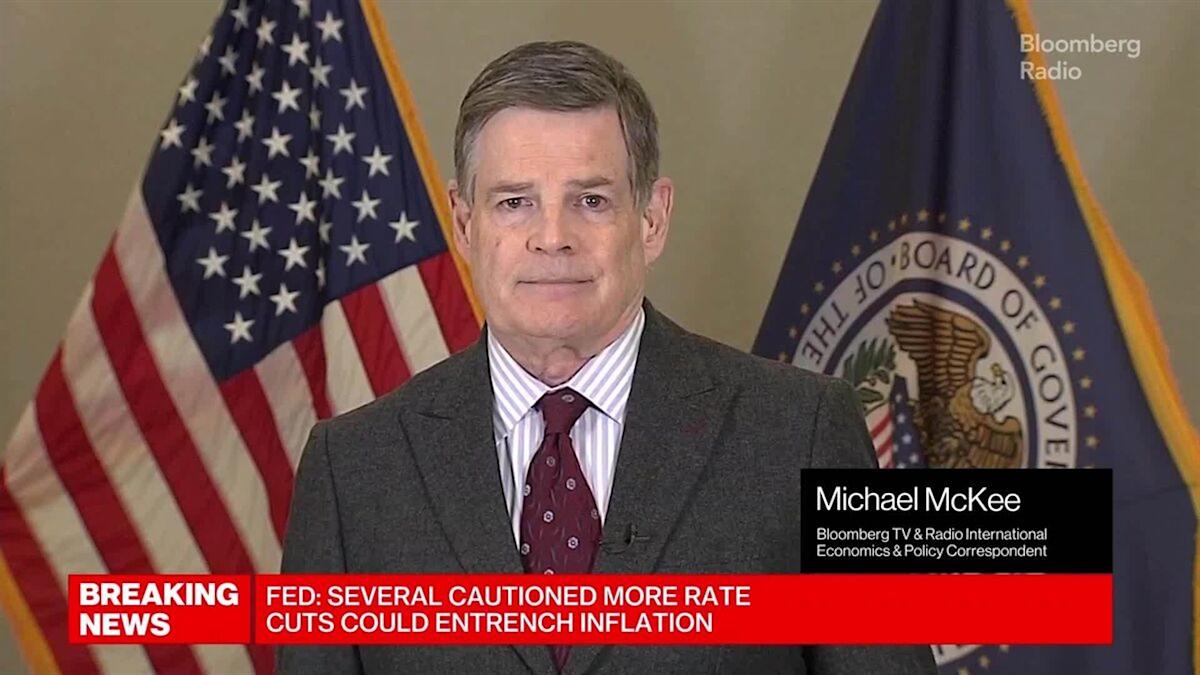
Global financial markets steadied on Tuesday as investors moved past initial anxiety surrounding legal developments involving the U.S. Federal Reserve, while persistent concerns about institutional independence continued to weigh on the U.S. dollar and support demand for safe-haven assets.
Equity markets across the United States, Europe, and Asia traded with reduced volatility after sharp swings earlier in the week. Investors appeared to conclude that while political and legal noise remains elevated, the immediate risk of policy disruption is limited.
United States: Stocks Near Records, Bonds Stabilize
On Wall Street, major indexes finished modestly higher after a subdued session. The benchmark S&P 500 rose 0.18% to close at 6,982, extending its record streak. The Dow Jones Industrial Average gained 0.15% to 49,665, while the Nasdaq Composite advanced 0.22% to 22,410, supported by technology and consumer discretionary shares.
U.S. government bonds also showed signs of calm. The 10-year Treasury yield edged up 2 basis points to 4.21%, after trading in a narrow range between 4.18% and 4.23% during the session. The 2-year yield, which is more sensitive to interest rate expectations, held steady near 4.36%.
Traders said bond markets were balancing reduced political shock with continued caution ahead of key economic data later in the week.
“Once the initial headlines were absorbed, the market recognized that the Fed’s operational framework remains intact,” said a senior fixed-income portfolio manager at a U.S. asset management firm. “But uncertainty hasn’t disappeared.”
Europe: Modest Gains, Caution Persists
European equities followed Wall Street higher, though gains were limited. The STOXX 600 index rose 0.3%, with Germany’s DAX up 0.4%, France’s CAC 40 gaining 0.2%, and the UK’s FTSE 100 adding 0.1%.
European government bonds were little changed, with German 10-year Bund yields holding near 2.42%, while UK 10-year gilt yields stood at 4.08%.
Market participants in Europe said investors remain focused on global political risk rather than regional fundamentals.
Asia: Mixed Performance Across Countries
Asian markets delivered a mixed performance as regional investors reacted cautiously to global developments.
-
Japan’s Nikkei 225 rose 0.6% to 41,980, supported by exporters and technology shares.
-
Hong Kong’s Hang Seng Index fell 0.4% to 17,950, weighed down by property and financial stocks.
-
China’s CSI 300 slipped 0.2% to 3,465, as weak domestic demand continued to cap gains.
-
Australia’s ASX 200 gained 0.3% to 7,865, helped by energy and mining stocks.
Foreign Exchange: Dollar Weakens Broadly
Currency markets reflected ongoing caution. The U.S. dollar index fell 0.35% to 98.85, extending its decline from early January highs.
The euro rose 0.28% to $1.1685, while the Japanese yen strengthened to 141.90 per dollar, as investors trimmed dollar exposure. The British pound traded at $1.3520, up 0.2% on the day.
Emerging market currencies also firmed, with the Mexican peso gaining 0.4% and the South African rand strengthening 0.6%, supported by improved global risk sentiment.
“The dollar’s New Year rebound has clearly faded,” said a senior FX strategist at a global investment bank. “Political risk is now a more dominant driver than rate differentials.”
Commodities: Gold Hits Record, Oil Extends Rally
Gold prices surged to fresh record levels as investors sought protection from currency weakness and political uncertainty. Spot gold touched an all-time high of $4,612 per ounce before easing slightly to $4,590, still up nearly 1.9% on the day.
Oil prices also climbed, supported by geopolitical concerns and supply uncertainty:
-
Brent crude rose 0.8% to $63.90 per barrel
-
U.S. West Texas Intermediate gained 0.6% to $59.55 per barrel
Both benchmarks settled at their highest levels in nearly seven weeks.
Outlook: Data and Earnings in Focus
Investors are now turning attention to upcoming macroeconomic data, including U.S. inflation figures, China trade data, and a fresh round of corporate earnings led by major global banks and industrial firms.
While market volatility has eased, analysts warned that confidence remains fragile.
“Markets have stabilized, but they’re not comfortable,” said a global rates strategist based in Sydney. “The underlying concern about institutional credibility will continue to influence currencies and safe-haven assets.”
For now, global markets appear to be adjusting to a new equilibrium — one marked by resilient equities, stable bonds, a softer dollar, and sustained demand for gold.