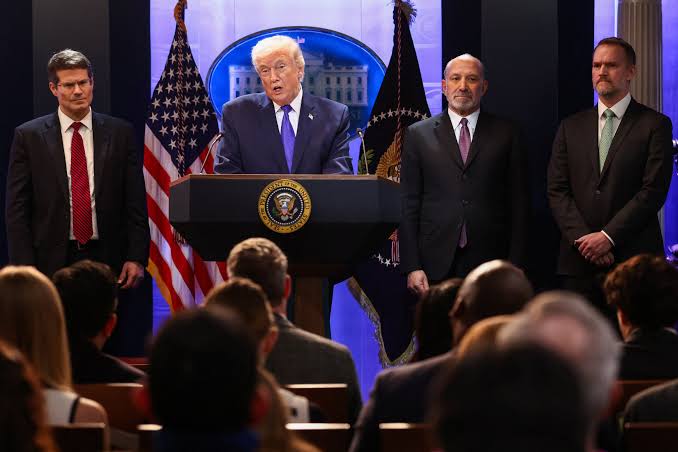
The Federal Reserve just made its first big call of 2026, and if you were hoping for a rate cut to ease your mortgage or credit card burden, you're going to have to wait a little longer. Fed Chair Jerome Powell and his team at the Federal Open Market Committee (FOMC) voted to keep interest rates unchanged at 3.50% to 3.75% after wrapping up their two-day meeting on Wednesday, January 28th.
This marks a pause after three consecutive rate cuts that closed out 2025, and frankly, nobody should be surprised. The decision was widely expected by Wall Street economists and traders alike. But what's really interesting isn't what happened today—it's what Powell said about what's coming next, and the political drama swirling around the nation's most powerful economic institution.
The Big Picture: Why the Fed Hit Pause
Let's cut through the Fed-speak and get to what actually matters. The Federal Reserve held its benchmark interest rate steady after three straight quarter-point cuts in September, October, and December of last year. Those cuts brought the federal funds rate—basically what banks charge each other for short-term loans—down from significantly higher levels to where it sits now.
So why stop now? According to the FOMC's official statement, economic data shows the economy is "expanding at a solid pace." Translation: things aren't bad enough to warrant emergency rate cuts, but they're not so hot that the Fed needs to slam on the brakes either.
Here's what Powell and his colleagues are seeing:
- Job growth has slowed down, but it hasn't cratered. The unemployment rate is sitting at around 4.4% as of December 2025, which is relatively low by historical standards.
- Inflation is still running above the Fed's 2% target, currently at 2.8% based on November 2025 data. That's not terrible, but it's enough to make the Fed cautious about cutting rates too aggressively.
- The economy grew at a blistering 4.4% annual rate in the third quarter, far outpacing what most economists expected. That kind of growth suggests the economy doesn't need much help right now.
"After the three recent rate cuts, we're well-positioned to address the risks that we face on both sides of our dual mandate," Powell said during his press conference. "We haven't made any decisions about future meetings, but the economy is growing at a solid pace. The unemployment rate has been broadly stable, and inflation remains somewhat elevated."
The Dissenting Voices: Not Everyone Agreed
Here's something that doesn't get enough attention in the headlines: the Fed's decision wasn't unanimous. Ten members voted to hold rates steady, but two voted for another quarter-point cut. Those dissenters were Governors Stephen Miran and Christopher Waller, both Trump appointees who clearly think the economy could use some more easing.
This is Miran's fourth consecutive dissent, though previously he was pushing for even deeper cuts—like half a percentage point at a time. The fact that he's now "only" advocating for a quarter-point reduction actually suggests he might be becoming slightly more hawkish, or at least more realistic about what the committee will accept.
Waller, meanwhile, is an interesting case. He actually interviewed for the Fed chair position and is considered a long shot to replace Powell when his term ends in May. His vote for a rate cut could be seen as staking out a position that's more dovish than the committee consensus—maybe positioning himself as someone who's more willing to support economic growth even if it means tolerating slightly higher inflation.
The Tariff Factor: Trump's Trade Policy Looms Large
One of the most fascinating aspects of this Fed meeting is how much attention Powell paid to tariffs during his press conference. And let's be real: when the Fed chair starts talking extensively about trade policy, it's because trade policy is seriously messing with his ability to manage the economy.
Here's the situation: President Trump's tariffs, which started ramping up significantly in his second term, have been pushing up the prices of imported goods. Powell noted that elevated inflation readings "largely reflect inflation in the goods sector, which has been boosted by the effects of tariffs," while the services sector has actually been seeing some disinflation.
In December, Powell made an even more striking statement: "It's really tariffs that are causing most of the inflation overshoot." He reiterated his expectation that the tariff impact on inflation is likely to be a "one-time price increase" rather than a sustained inflationary spiral.
The problem is that nobody really knows how this plays out. Goldman Sachs economists estimated that tariffs caused inflation to increase by half a percentage point in 2025—roughly matching Powell's assessment that tariffs account for the entire overshoot above the Fed's 2% target. And Goldman anticipates inflation could increase by another three-tenths of a percentage point in just the first six months of 2026.
But here's where it gets tricky: businesses have been absorbing a lot of the tariff costs, not passing them on to consumers. According to JPMorgan's analysis, businesses footed roughly 80% of the tariff bill last year. But that ratio could flip dramatically in 2026, with businesses passing along 80% of the costs instead. When that happens, American consumers will feel it in their wallets in a big way.
The Labor Market Mystery: Are Things Worse Than They Look?
Powell dropped a bit of a bombshell during his press conference when he revealed that the Fed believes official jobs numbers might be overstating the strength of the labor market. According to Powell, the Fed thinks payroll figures are overstating job growth by roughly 60,000 per month.
Let that sink in for a second. When you see headlines saying the economy added 40,000 jobs in a month, the actual number might be negative 20,000. That's a huge discrepancy, and it explains why the Fed is being so cautious about declaring victory on employment.
"A good part of the slowing in the pace of job growth over the past year reflects a decline in the growth of the labour force due to lower immigration and labour force participation," Powell explained. "Though labour demand has clearly softened, as well as other indicators, including openings, layoffs, hiring and nominal wage growth show little change in recent months."
The picture is complicated. Unemployment claims remain historically low, which usually suggests the job market is healthy. But hiring has slowed to a near-crawl, and some of the data might be painting a rosier picture than reality warrants. This is exactly the kind of mixed signal that makes the Fed want to sit tight and wait for more clarity.
Political Pressure and the Fight for Fed Independence
You can't talk about this Fed meeting without addressing the elephant in the room: the intense political pressure Powell is facing from President Trump and the broader political establishment.
Let's recap the recent drama:
- The Justice Department has opened an investigation into Powell related to the Fed's $2.5 billion building renovation project. Powell has called this investigation a pretext for weakening the Fed's independence.
- The Supreme Court is weighing whether to allow Fed Governor Lisa Cook to keep her job after Trump attempted to fire her over allegations of mortgage fraud, which she denies.
- Trump has repeatedly criticized the Fed for not cutting rates more aggressively and has said he'll soon announce Powell's successor when his term ends in May.
- Trump told CNBC that if Powell serves out his remaining time as a Fed governor after stepping down as chair, "his life won't be very, very happy, I don't think, by doing it. I think he wants to get out. He has not done a good job."
This is unprecedented territory. Previous presidents have certainly criticized the Fed and tried to influence monetary policy, but nobody has been as aggressive or as public about it as Trump. The attacks on Powell aren't just about disagreements over interest rates—they represent a fundamental challenge to the principle of central bank independence.
At his press conference, Powell expressed confidence that the Fed will maintain its independence despite growing political pressure. "We haven't lost it," Powell said of Fed independence, adding: "I don't believe we will."
It's worth noting that Powell was unusually forceful in his January 11th statement about the Justice Department investigation, calling it out explicitly as an attack on Fed independence. That's not the kind of language you typically hear from a Fed chair, and it shows just how seriously Powell views the threat.
What's Next: When Will the Fed Cut Again?
The million-dollar question everyone wants answered is: when will the Fed start cutting rates again?
The short answer is: probably not until June at the earliest, and maybe not even then.
Financial markets expect the Fed to maintain interest rates at current levels until its June meeting, according to CME FedWatch. Some analysts think it could be even later than that. And honestly, that makes sense given what the Fed is dealing with.
Here's what needs to happen before the Fed feels comfortable cutting again:
- Inflation needs to move convincingly toward 2%. Right now it's stuck at 2.8%, and with tariffs potentially adding more upward pressure in early 2026, the Fed wants to see sustained progress before easing policy.
- The labor market situation needs to clarify. Are we really seeing job growth, or is the data misleading? The Fed needs more time to figure that out.
- Tariff policy needs to stabilize. As long as Trump keeps threatening new tariffs or announcing exemptions and carveouts, businesses can't plan effectively and prices remain volatile.
Powell emphasized repeatedly that "monetary policy is not on a preset course" and that the Fed will make decisions "meeting by meeting" based on incoming data. That's Fed-speak for "we're in wait-and-see mode."
At the December meeting, Fed policymakers projected just one interest rate cut for all of 2026. However, a recent CNBC Fed Survey found that economists expect two rate cuts this year, with most betting on June or later for the first move.
Futures markets are pricing in at most two rate reductions in 2026 and none in 2027, regardless of who becomes the next Fed chair. That's a pretty sobering outlook if you were hoping for a rapid return to the ultra-low rates of the 2010s.
What This Means for Your Wallet
Okay, enough macro talk. What does all this actually mean for regular Americans trying to manage their finances?
Mortgages
Don't expect dramatic relief on mortgage rates anytime soon. The Fed doesn't directly set mortgage rates—those move with the 10-year Treasury yield—but Fed policy certainly influences the broader interest rate environment. Mortgage rates in 2026 are expected to bounce between 5.7% and 6.5%, according to Bankrate's annual forecast. As of late January, the average 30-year fixed mortgage rate is around 6.25%, though borrowers with excellent credit can sometimes find rates closer to 5.6%.
And here's the kicker: even if mortgage rates do come down a bit, it doesn't necessarily mean homes will become more affordable. Lower rates could actually fuel more demand, pushing prices up in hot markets where housing supply is already constrained.
Credit Cards and Personal Loans
These rates aren't likely to drop much either. Credit card rates tend to move more directly with the Fed's benchmark rate, so if the Fed stays on hold through mid-2026, expect credit card APRs to remain elevated. The silver lining? They probably won't go higher unless inflation really takes off and forces the Fed to start hiking again.
Savings Accounts
On the flip side, if you've got money in a high-yield savings account, you should continue to earn decent interest for now. Many online banks are still offering rates in the 4% range, which is historically very attractive. That might come down gradually if and when the Fed starts cutting, but for now, it's one of the few bright spots for savers.
Stock Market
The stock market has been on a tear, with the S&P 500 closing at a record high and already up about 2% to start 2026. Goldman Sachs strategists expect the index to climb another 12% this year. But volatility could increase if political uncertainty around the Fed continues or if tariff policy causes major disruptions to corporate earnings.
The Government Shutdown Factor
One issue that's flying under the radar but could become significant: the potential for another government shutdown. Remember that late-2025 shutdown that lasted 43 days? That was the longest in U.S. history, and it caused significant economic disruption.
Powell mentioned in his remarks that "The temporary shutdown of the federal government likely weighed on economic activity last quarter." When the government shuts down, the Treasury needs to rebuild its cash reserves, which drains liquidity from financial markets. And when liquidity dries up, risk assets like stocks and crypto tend to get hit first.
There's been chatter about another potential shutdown on January 31st, though Congress has been working to avoid that scenario. If it does happen, expect the Fed to factor that into its decision-making at the next meeting.
Looking Ahead: The Powell Succession Question
Perhaps the most intriguing subplot of this Fed meeting is that it might be one of Powell's last as chair. His term ends in May 2026, and Trump has made it clear he plans to replace him.
Prediction markets are pointing to Rick Rieder, BlackRock's chief investment officer, as a leading contender to succeed Powell. Other names in the mix include National Economic Council Director Kevin Hassett, Fed Governor Christopher Waller (who voted for a cut at this meeting), and former Fed Governor Kevin Warsh.
Whoever takes over will inherit a complicated situation: an economy that's growing solidly but facing headwinds from trade policy uncertainty, inflation that's stubbornly above target, a labor market that's showing mixed signals, and intense political pressure to cut rates despite those challenges.
The next Fed chair will also have to navigate the politics of independence. Will they be willing to stand up to presidential pressure like Powell has, or will they cave to demands for lower rates even if economic conditions don't warrant them? That question will have enormous implications for the economy and financial markets.
The International Context: How the World Is Watching
It's worth noting that the Fed's decisions don't just affect Americans—they ripple through the global economy. The dollar held gains against the euro and yen after the Fed's decision, which has implications for international trade and capital flows.
When asked about dollar volatility during his press conference, Powell gave a typical Fed chair answer: "We don't talk about the dollar. We don't talk about what moves it around. It's just not appropriate for us to do." He noted that the Treasury Department has oversight over currency policy, not the Fed.
But the reality is that Fed policy decisions are among the most important drivers of dollar strength or weakness. When the Fed holds rates steady while other central banks are cutting more aggressively, the dollar tends to strengthen. That makes American exports more expensive and imports cheaper, which has significant effects on trade balances and corporate profitability.
Key Takeaways: What You Need to Know
Let's boil all of this down to the essentials:
- The Fed held rates steady at 3.50%-3.75% after three straight cuts, and that was universally expected. No surprises there.
- Two governors dissented, voting for another cut. That shows there's disagreement within the Fed about how restrictive policy needs to be.
- Tariffs are driving the inflation overshoot above the Fed's 2% target, according to Powell. This is a huge factor that's largely outside the Fed's control.
- The labor market is weaker than it looks, with the Fed believing official jobs data overstates employment growth by about 60,000 per month.
- Political pressure on the Fed is intense and unprecedented, with a Justice Department investigation of Powell, Supreme Court case over Governor Cook, and Trump's constant criticism creating a challenging environment.
- Rate cuts probably won't resume until June at the earliest, and maybe not even then. The Fed is in wait-and-see mode.
- Powell's term as chair ends in May, and Trump is expected to announce his replacement soon. That succession question is hanging over everything.
The Bottom Line
This Fed meeting was always going to be a hold, and that's exactly what we got. But the real story is what's happening around the edges: the political drama, the tariff impacts, the labor market mysteries, and the questions about what comes next for Fed leadership.
For average Americans, the message is clear: don't expect interest rate relief anytime soon. Plan your finances assuming rates will stay roughly where they are for at least the next few months, and possibly longer. If you've got high-interest debt, now's the time to work on paying it down. If you've got cash to save, high-yield savings accounts are still paying decent rates. And if you're thinking about big financial decisions like buying a home or refinancing, don't wait around hoping for dramatically lower rates in the near future.
The Fed is playing a difficult hand, trying to balance economic growth, employment, and inflation while navigating unprecedented political pressure. Powell has made it clear he's committed to maintaining the Fed's independence, but his time in charge is running out. What happens next will depend on who replaces him, how tariff policy evolves, and whether the economic data starts giving clearer signals about where we're headed.
One thing's for sure: 2026 is shaping up to be another wild ride for monetary policy and the American economy. Buckle up.