In early 2026, Greenland — the world’s largest island — has become the center of one of the most intense geopolitical confrontations of the decade. Though no actual war is underway, tensions between the United States and its NATO allies have escalated sharply over competing visions for Greenland’s future. What began as strategic rhetoric has grown into a diplomatic crisis with significant implications for global security dynamics and financial markets.
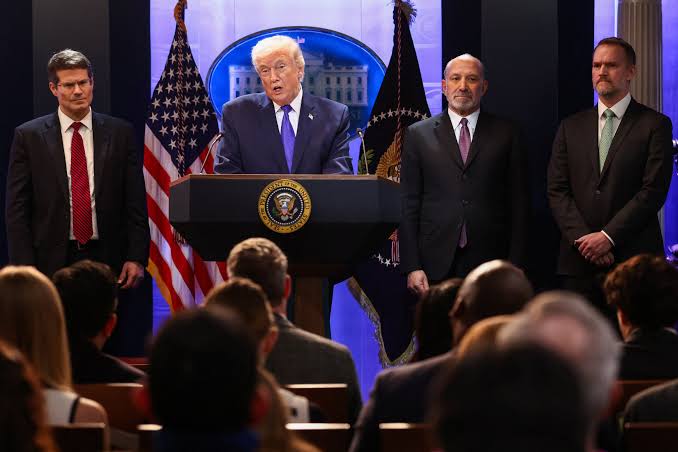
At the heart of the dispute lies U.S. President Donald Trump’s renewed insistence that the United States should hold “ownership” over Greenland, citing national security reasons and its strategic position within the Arctic Circle. Trump has argued that control of the island is essential to counter perceived military threats from Russia and China in the rapidly warming Arctic. He has even suggested that military force should remain a viable option if necessary — a remark that has alarmed allied governments.
Greenland is presently an autonomous territory within the Kingdom of Denmark. While Denmark controls defense and foreign affairs, Greenland manages most domestic policy. Its strategic location — between North America and Europe — has historically made it important for missile defense and surveillance, and this relevance has only grown as climate change unlocks new shipping routes and access to resources.
Reactions from Denmark, NATO, and Europe
The response to Trump’s statements has been swift and strongly negative in Denmark and across Europe. The Greenland government has formally stated it will not accept U.S. control under any circumstances, reaffirming its desire for sovereignty and respect for international law.
Danish Prime Minister Mette Frederiksen has been particularly blunt, warning that any military attempt by the United States to seize Greenland would effectively end NATO: “If the United States chooses to attack another NATO country, then everything stops — that includes NATO and the security framework that has existed since the end of World War II.”
European leaders have also mobilized diplomatically, with discussions ongoing about boosting NATO’s Arctic presence and reinforcing collective defense without compromising the sovereignty of Greenland or Danish control. The UK and Germany are reportedly looking at joint Arctic missions, while a bipartisan U.S. congressional delegation is set to visit Denmark to show transatlantic unity.
Why Greenland Matters
Greenland is much more than a frozen wilderness. Its geopolitical importance stems from several factors:
-
Strategic Military Position: Controlling Greenland strengthens early-warning systems and Arctic defense, bridging North America and Europe.
-
Natural Resources: The island is believed to hold large reserves of rare earth elements, lithium, and other critical minerals essential for electronics, defense technologies, and clean energy development.
-
Climate-Driven Access: As Arctic ice melts, previously inaccessible mineral deposits and new shipping routes are becoming viable, drawing interest from global powers.
These strategic considerations explain why the United States, as well as Russia and China, view the Arctic as an increasingly contested zone. The current tension is thus part of a larger “great power competition” for influence in the region.
Global Market Reactions
Though the standoff remains diplomatic rather than military, financial markets have already started pricing in geopolitical risk. Investors are highly sensitive to the possibility of a fracture within NATO — an alliance that has underpinned Western security and economic stability since 1949.
1. Safe-Haven Assets Surge
In recent trading, gold and other traditional safe-haven assets have risen as uncertainty pushes investors away from riskier equities toward perceived secure stores of value. This trend typically reflects fear of geopolitical instability.
2. Defense Stocks Rally
Global defense and aerospace stocks, especially in Europe, have experienced gains. Governments signaling a desire to bolster Arctic security have boosted expectations of higher defense spending, benefiting major defense contractors and related industries.
3. Currency and Macro Impact
Heightened geopolitical risk often strengthens currencies seen as safe, such as the U.S. dollar (in some contexts) and Swiss franc, while pressuring risk-sensitive currencies. Simultaneously, bond markets may see increased demand for government securities as investors seek stability.
4. Resource Sector Speculation
Companies involved in mining critical minerals — particularly rare earths — have drawn speculative interest, since Greenland’s reserves could become strategically vital for diversified supply chains, reducing dependency on dominant producers like China.
What’s Next?
The Greenland crisis is far from resolved. At present, no military conflict has occurred, and diplomatic engagement continues. However, the standoff underscores how geopolitical flashpoints — even without actual warfare — can ripple through financial markets, reshaping investor strategies and asset valuations.
In a world where geopolitical risk is increasingly priced into markets, situations like Greenland serve as reminders of the interconnectedness between global politics and economic systems. Whether through defense sector growth, safe-haven demand, or strategic resource investment, markets are adjusting to the new Arctic reality — one defined by both opportunity and uncertainty.