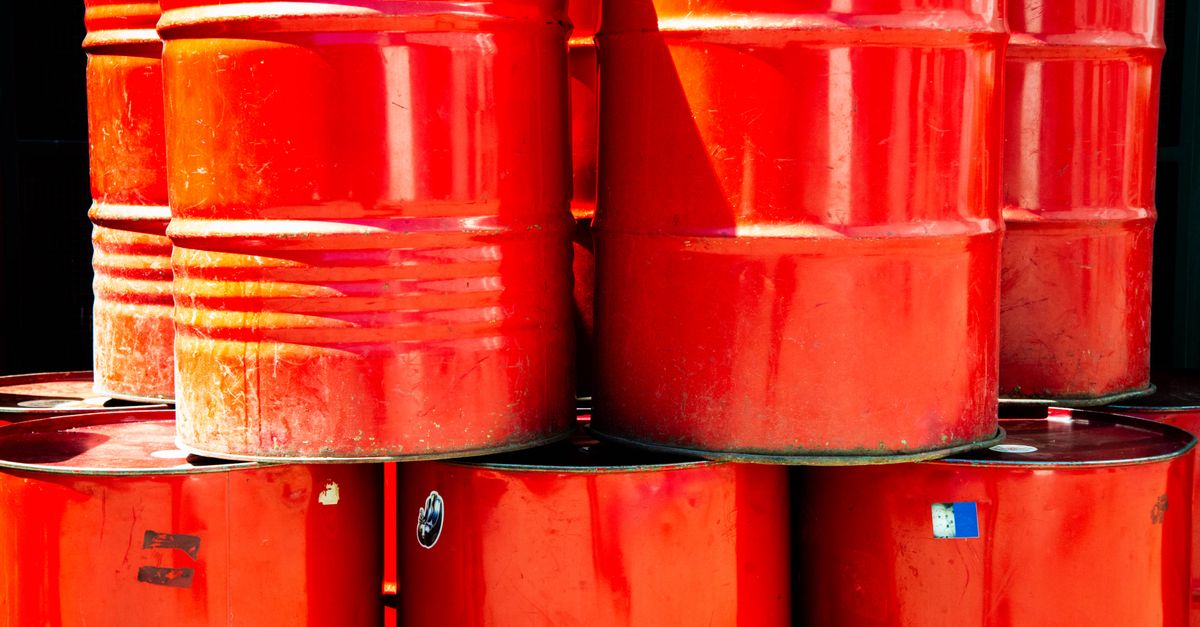
Global commodity markets are navigating a complex landscape on Tuesday, October 27, 2026, marked by significant geopolitical developments and shifting supply-demand dynamics. Oil prices are exhibiting volatility, with Brent Crude experiencing a notable decline today, while WTI Crude remains relatively stable. Gold, often seen as a safe-haven asset, has posted modest gains, reflecting underlying market uncertainty.
Key drivers include ongoing diplomatic efforts and regional conflicts impacting crude supplies, alongside a cautious stance from OPEC+ regarding production targets. Simultaneously, concerns over China’s industrial demand continue to weigh on the broader metals and energy complex. The interplay of these factors creates a challenging environment for investors assessing risk and opportunity across various asset classes.
Oil Market and Inventory Data
The oil market is under pressure, with Brent Crude (BZ=F) trading at $110.82, down 4.31% for the day, while WTI Crude (CL=F) stands at $101.74, showing a marginal 0.02% decrease. These movements come as traders assess geopolitical developments. While the EIA weekly petroleum report is available, specific inventory figures were not detailed in the provided snapshot.
OPEC+ has consistently opted for a steady approach to oil production. The alliance agreed to keep November oil output targets steady, following a similar decision to keep October policy unchanged. Sources had previously indicated that OPEC+ was likely to pause oil output hikes after September, and a commentary suggested any output hike is irrelevant for now. This consistent policy reflects a cautious approach amidst global uncertainties.
Gold Volatility and Technical Levels
Gold (GC=F) is currently trading at $4,052.4, up 0.35% today. This modest gain comes amidst broader market volatility. Over the past 20 sessions, gold has seen significant swings, reaching a high of $4,259 and a low of $3,989.1. These levels suggest key resistance around $4,259 and support near $3,989.1, which traders are closely monitoring. The precious metal's performance continues to be sensitive to geopolitical developments, acting as a traditional safe haven in times of increased risk.
China Demand Outlook and Industrial Signals
The demand outlook from China, a major consumer of commodities, remains a critical factor. Recent data points to potential headwinds, with copper sliding as China industrial data weighed on demand expectations in late September. Furthermore, China had slashed oil refining volumes after crude imports collapsed in July. These indicators suggest a softening in industrial activity and energy consumption, which could exert downward pressure on global commodity pricing, particularly for energy and base metals.
Geopolitical Risk and Trade Tensions
Geopolitical developments are a primary driver of risk in current markets. Oil prices fell today as traders assessed Iran diplomacy and Saudi attacks, highlighting the direct impact of Middle East tensions. The surge in oil prices has also fueled Iran hardliners' case against a US deal. Further escalating tensions, Iran has stated it will take action against Sinokor ships in the Strait of Hormuz, posing a direct threat to shipping and global oil flows. Meanwhile, Russia faces its own challenges, with Russia's Arctic oil shortcut running into a wall of ice, potentially affecting its export capabilities. Adding to trade tensions, Democratic Senators have warned seaports not to handle Russian diesel, signaling continued Western pressure on Russian energy exports. These events collectively heighten supply concerns for oil and gas, while contributing to overall market risk aversion.
Cross-Asset Implications for Investors
The current environment of volatile commodity prices and elevated geopolitical risks has broad implications for investor portfolios. The significant movements in crude oil, influenced by Middle East tensions and OPEC+ policy, can ripple through global economies, affecting inflation expectations and corporate profitability. While the provided context does not offer specific data on equities, currencies, or bonds, the prevailing uncertainty typically leads to a flight to quality, potentially benefiting safe-haven assets like gold, which has shown modest gains today. Investors should closely monitor the evolving geopolitical landscape, particularly developments related to Iran and Russia, as well as OPEC+'s future production decisions and China's industrial activity for their potential impact across all asset classes.
Conclusion
As of October 27, 2026, commodity markets are poised for continued volatility. The immediate outlook suggests that crude oil prices will remain highly sensitive to geopolitical developments in the Middle East and any shifts in the Russia-West energy dynamic. Gold's performance will likely continue to reflect its safe-haven appeal amidst these uncertainties. Critical catalysts for the coming sessions include further updates on Iran diplomacy, any new statements from OPEC+ members, and incoming economic data from China. Investors are advised to remain vigilant to these intertwined factors shaping the global commodity and risk landscape.