Introduction: A Defining Moment for Global Markets
As the world moves toward 2026, global financial markets are standing at a critical turning point. After years of extraordinary monetary stimulus, pandemic recovery, inflation shocks, and aggressive interest rate cycles, investors are reassessing risk, return, and long-term value. Stock markets, cryptocurrencies, and commodities are no longer moving in isolation. Instead, they are increasingly shaped by shared macroeconomic forces such as central bank policy, geopolitical tensions, and structural shifts in technology and energy.
This moment represents both uncertainty and opportunity. Understanding how these three major asset classes interact — and what lies ahead — is essential for investors navigating the next phase of the global market cycle.
Global Stock Markets: Growth with Caution
Global equities enter 2026 with mixed momentum. While US markets have shown resilience driven largely by technology and artificial intelligence leaders, other regions have lagged behind due to slower growth and tighter financial conditions.
One of the defining characteristics of the current stock market is concentration risk. A small group of mega-cap companies has contributed a disproportionate share of overall returns. This has lifted headline indices but masked weakness in broader market participation. As a result, investors are increasingly cautious about valuations and sustainability.
Interest rates remain the most influential variable. Central banks such as the Federal Reserve and the European Central Bank have signaled a data-dependent approach, balancing inflation control with economic growth. If rate cuts materialize in 2026, equities could benefit — but only if corporate earnings remain stable.
From an investor perspective, global stocks are transitioning from a momentum-driven phase to a selective, fundamentals-based environment. Companies with strong balance sheets, pricing power, and consistent cash flows are expected to outperform in the next cycle.
Cryptocurrency Markets: Maturing Through Volatility
The crypto market has evolved significantly from its speculative beginnings. As 2026 approaches, digital assets are experiencing a period of consolidation rather than explosive growth. This phase reflects a maturing market adjusting to tighter liquidity and increased regulatory oversight.
Bitcoin continues to dominate market sentiment, increasingly viewed as a long-term store of value rather than a short-term trading instrument. Meanwhile, Ethereum remains central to decentralized finance, tokenization, and blockchain infrastructure development.
A key shift is the rising presence of institutional investors. Asset managers, hedge funds, and family offices are expanding crypto exposure, but with stricter risk controls. Regulatory clarity across major economies is helping legitimize the asset class, even as it reduces speculative excess.
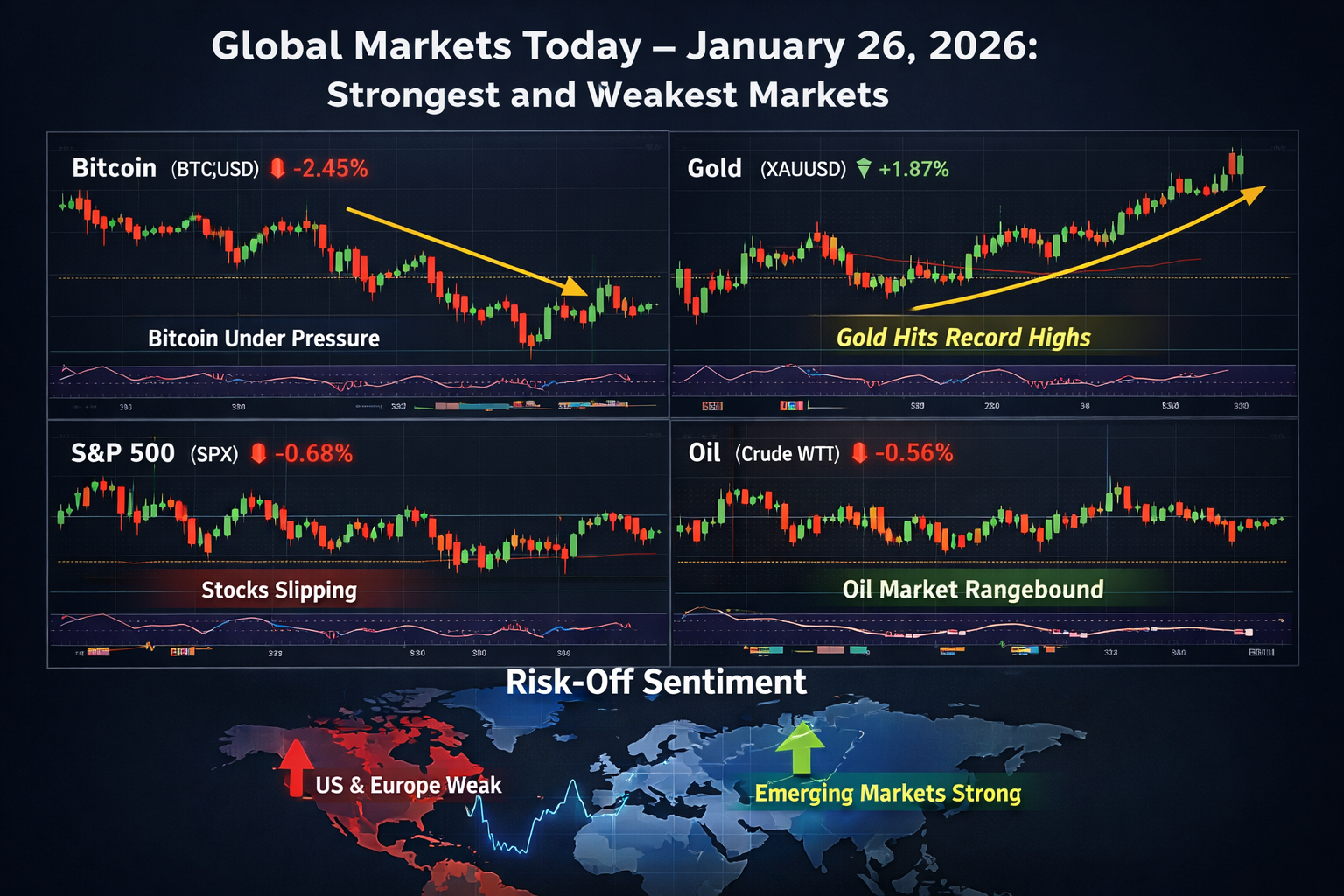
Despite this progress, cryptocurrencies remain highly sensitive to macroeconomic conditions. Changes in interest rates, dollar strength, and equity market sentiment often translate quickly into crypto price movements. For 2026, the outlook suggests moderate growth potential paired with ongoing volatility, favoring long-term holders over short-term speculators.
Commodities: A Tale of Diverging Trends
Commodities are emerging as one of the most interesting asset classes heading into 2026. Unlike stocks and crypto, commodities are being shaped by physical supply constraints, geopolitical risks, and structural demand changes.
Precious metals are leading the way. Gold has reaffirmed its role as a safe-haven asset, supported by central bank purchases and persistent macro uncertainty. Silver has benefited from both defensive demand and its growing use in clean energy technologies.
Industrial metals such as copper are gaining attention due to global electrification, renewable energy expansion, and electric vehicle adoption. These long-term trends suggest sustained demand beyond short-term economic cycles.
In contrast, energy markets remain under pressure. Crude Oil faces challenges from supply imbalances, geopolitical negotiations, and the gradual transition toward alternative energy sources. Agricultural commodities have also struggled with uneven demand and favorable supply conditions.
Overall, commodities are becoming less of a uniform trade and more of a selective allocation, where fundamentals matter more than broad macro bets.
The Macro Forces Shaping 2026
Across stocks, crypto, and commodities, several shared forces will define market direction in 2026.
Interest rate policy remains central. Lower borrowing costs could support risk assets, but premature easing could reignite inflation concerns. Inflation itself is expected to moderate, but sticky components such as services and wages remain a risk.
Geopolitical tensions continue to influence supply chains, currency flows, and commodity prices. Meanwhile, technological innovation — particularly in artificial intelligence and blockchain — is reshaping productivity expectations and investment strategies.
Another critical theme is investor behavior. After years of volatility, capital is shifting toward quality, diversification, and long-term resilience rather than speculative growth.
Investor Outlook: Strategy for the Next Cycle
For investors, 2026 is less about chasing the highest returns and more about managing risk intelligently. Stocks still offer growth potential, but selectivity is essential. Crypto presents long-term opportunity, but only for those who can tolerate volatility. Commodities provide diversification and inflation protection, especially in precious and industrial metals.
A balanced approach that accounts for macro uncertainty, valuation discipline, and structural trends is likely to outperform aggressive, one-sided positioning.
Conclusion: Opportunity at the Turning Point
Global markets are entering 2026 at a pivotal moment. The era of easy money and broad rallies is fading, replaced by a more complex environment that rewards knowledge, patience, and strategic allocation.
Stocks, cryptocurrencies, and commodities are no longer isolated silos. They are interconnected pieces of a global financial system adapting to new realities. Investors who understand these relationships — and position themselves accordingly — will be better equipped to navigate the opportunities and challenges ahead.