The Indian stock market has recently entered a phase of increased volatility, leaving many investors wondering about the future direction of equities. Benchmark indices like the Sensex and Nifty 50 have witnessed noticeable fluctuations in recent weeks. While the Indian economy continues to show strong long-term growth potential, short-term market movements are currently being influenced by a mix of global and domestic factors. Understanding the current situation can help investors make better financial decisions and avoid panic during market corrections.
Recent Performance of the Indian Stock Market
In recent trading sessions, the Indian stock market has seen a sharp decline. Both the Sensex and Nifty experienced strong selling pressure across several sectors, particularly banking, financial services, and technology stocks. Large-cap companies that typically provide stability in the market were also affected, which amplified the overall fall in benchmark indices.
Market volatility has increased as investors react to global economic signals, geopolitical tensions, and changes in foreign investment flows. Although the market has experienced short-term corrections, the broader trend still shows that Indian equities remain stronger compared to previous years.
Corrections in the stock market are not unusual. In fact, they are a natural part of market cycles. After long periods of bullish growth, markets often experience temporary declines as investors book profits and reassess economic conditions.
Global Factors Affecting the Indian Stock Market
One of the biggest reasons behind the current market volatility is the uncertain global economic environment. International markets have also been facing pressure due to geopolitical tensions and economic policy changes in major economies such as the United States and Europe.
Global investors often shift their capital between markets depending on risk perception. When uncertainty rises, investors tend to move money into safer assets such as gold or government bonds instead of equities. This shift can lead to large-scale selling in emerging markets, including India.
Another important factor is the fluctuation in crude oil prices. India imports a large portion of its energy needs, so rising oil prices can increase inflation and production costs for companies. When businesses face higher operating costs, their profit margins may shrink, which negatively affects stock prices.
Impact of Foreign Institutional Investors (FIIs)
Foreign Institutional Investors play a major role in determining short-term movements in the Indian stock market. When foreign investors bring capital into the country, the market generally rises due to increased liquidity. However, when they withdraw funds, the market can experience sudden declines.
In recent weeks, many FIIs have reduced their exposure to Indian equities. This has created additional selling pressure on the market. Currency fluctuations, global interest rates, and economic uncertainty in developed countries often influence these investment decisions.
Despite this temporary outflow, India continues to attract long-term foreign investment due to its strong economic growth, expanding digital economy, and increasing consumer demand.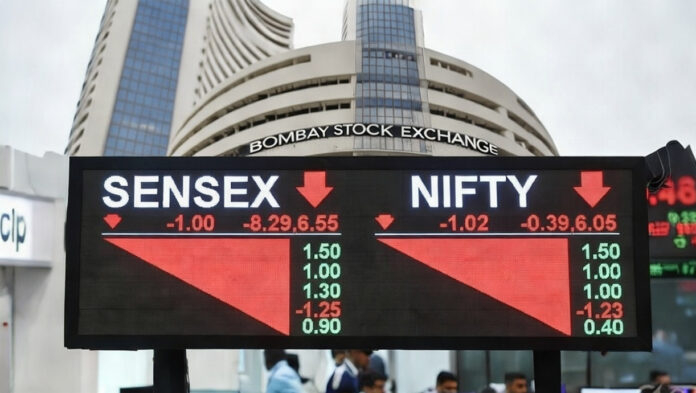
Domestic Economic Factors
Apart from global influences, several domestic factors are also affecting market sentiment. Inflation trends, interest rate policies from the Reserve Bank of India, and corporate earnings reports all play important roles in shaping investor confidence.
If inflation rises too quickly, central banks may increase interest rates to control price levels. Higher interest rates can reduce liquidity in the market and make borrowing more expensive for businesses. As a result, stock market performance may weaken temporarily.
Corporate earnings are another critical factor. Investors closely monitor quarterly results from major companies to evaluate whether businesses are meeting growth expectations. When earnings fall short of forecasts, stock prices often decline.
Sector-Wise Market Performance
Different sectors of the market react differently during periods of volatility. Banking and financial stocks have recently experienced significant pressure because they are closely linked to economic activity and interest rate changes.
Technology companies have also faced challenges due to slower global demand and currency fluctuations. On the other hand, defensive sectors such as healthcare, pharmaceuticals, and consumer staples tend to perform relatively better during uncertain market conditions.
Investors often rotate their investments from high-growth sectors to more stable industries when the market becomes volatile. This sector rotation is a common strategy used by institutional investors to manage risk.
What Investors Should Do During Market Volatility
Market corrections can create fear among retail investors, but experienced investors understand that volatility is a normal part of investing. Instead of reacting emotionally, investors should focus on long-term financial goals and strong fundamentals.
Diversification remains one of the most effective strategies during uncertain market conditions. Spreading investments across different sectors and asset classes can reduce overall risk. Investors should also avoid making decisions based purely on short-term market movements.
Another important strategy is systematic investing. Many investors use methods such as regular investment plans to gradually build their portfolios over time. This approach allows investors to take advantage of market dips without trying to perfectly time the market.
Long-Term Outlook for the Indian Stock Market
Despite short-term volatility, the long-term outlook for the Indian stock market remains positive. India is one of the fastest-growing major economies in the world, supported by strong demographics, technological innovation, and expanding infrastructure.
Government initiatives focused on manufacturing, digital transformation, and financial inclusion are expected to support long-term economic growth. Increasing participation from retail investors has also strengthened the domestic investment ecosystem.
As corporate earnings grow and economic reforms continue, the Indian stock market is likely to remain an attractive destination for both domestic and international investors.
Conclusion
The current situation in the Indian stock market reflects a period of temporary correction driven by global uncertainties, foreign investor movements, and economic factors such as inflation and interest rates. While the short-term outlook may appear uncertain, the fundamental growth story of India remains strong.
For investors, the key is to stay informed, maintain a disciplined investment approach, and focus on long-term opportunities rather than reacting to short-term market fluctuations. Market volatility often creates opportunities for investors who are prepared to invest patiently and strategically.