In a series of unusual developments this week, one of the United States Air Force’s most secretive aircraft — the Boeing E-4B Nightwatch, popularly nicknamed the “Doomsday Plane” — has been widely spotted flying domestically and landing at major U.S. airports, setting off a wave of speculation and discussion across news media and social platforms.
The aircraft was first tracked flying into the Washington, D.C., area before making a rare touchdown at Los Angeles International Airport (LAX) earlier this week — a sequence of events that is uncommon and has drawn public interest because these flights are rarely visible on civilian flight trackers.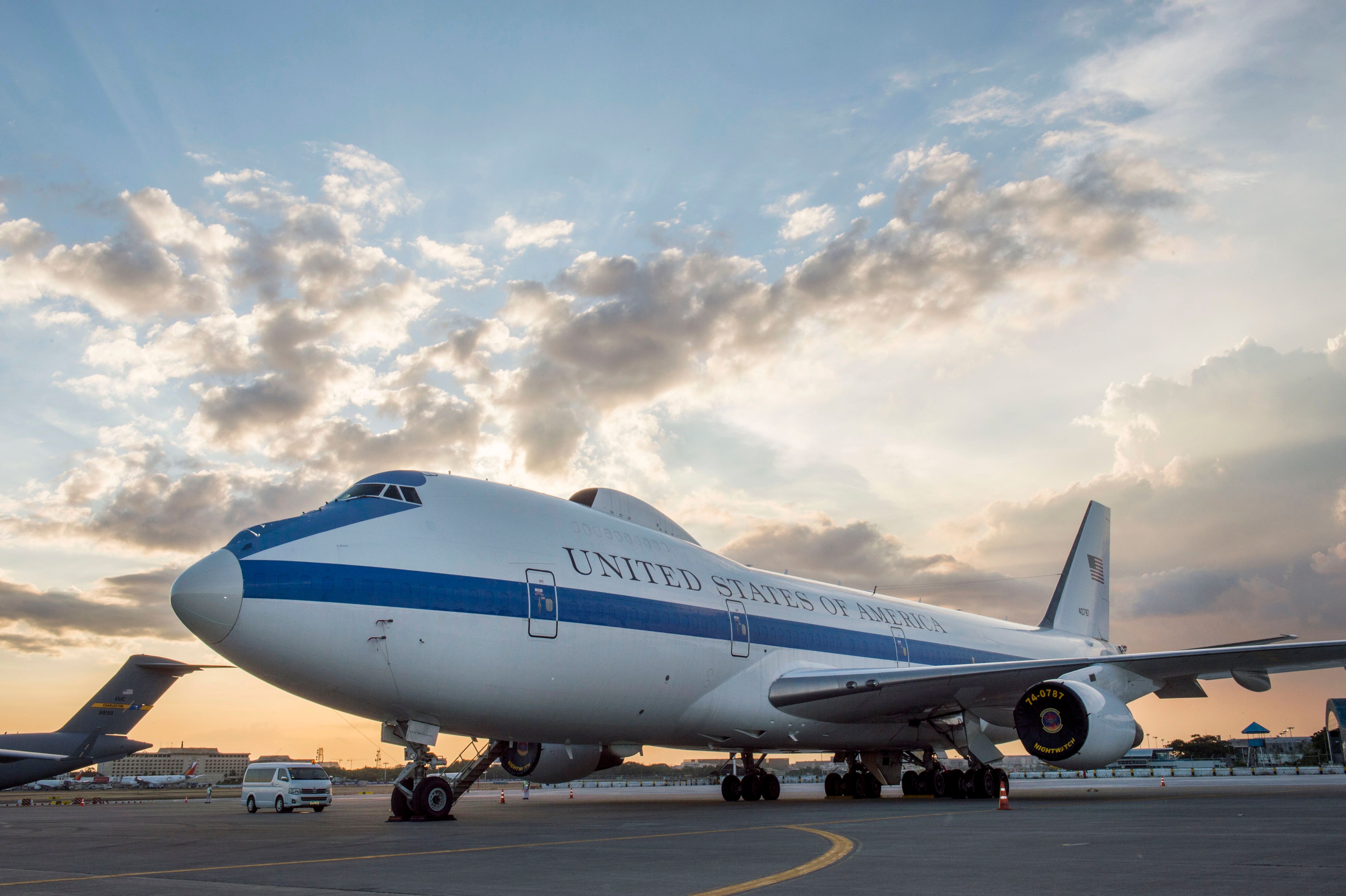
What Is the ‘Doomsday Plane’?
The Doomsday Plane is not a combat aircraft but a highly specialized airborne command post designed to ensure continuity of government in dire scenarios, including nuclear war or large-scale national emergencies. Officially known as the National Airborne Operations Center (NAOC), the E-4B is built with advanced communications systems and hardened against electromagnetic pulses to allow the U.S. President, Secretary of Defense, and senior leadership to remain operational even if ground-based command structures are compromised.
Unlike Air Force One, which is primarily for presidential transport, the E-4B functions as a mobile flying war room, capable of coordinating strategic operations and communications under extreme conditions.
Why Its Recent Moves Made Headlines
The recent flights caught attention because:
-
Public sightings are rare: The E-4B typically avoids civilian airspace and may only be visible to the public during specific operational movements or training flights, making its appearance a notable event.
-
Landing at major airports is unusual: Seeing the aircraft at a busy commercial hub like LAX is exceptionally uncommon, sparking curiosity and speculation.
-
Timing amid geopolitical tension: The sightings occurred during a period marked by various international flashpoints and strategic tensions, prompting broad online and media discussion about what these movements might signify.
Some reports also noted that senior defense officials, including the U.S. Secretary of Defense, were on board during parts of the journey, adding to public intrigue — though officials have not described the flight as a crisis deployment.
What Officials Are Saying (and Not Saying)
So far, the U.S. Department of Defense has not issued an official explanation linking this aircraft’s movements to an imminent national emergency or specific global conflict. Analysts suggest the flight could be part of routine readiness operations, training, or positioning for official travel, which sometimes involve this aircraft even when there is no active crisis.
Military aviation experts note that such flights are not reliable indicators of immediate conflict — instead, they reflect broader defense preparedness efforts that happen in the background of daily military operations.
Why the Public Is Watching
Even though there’s no confirmed emergency, public interest has soared for several reasons:
-
The Doomsday Plane holds a dramatic and symbolic name that evokes images of global catastrophe, even though its purpose is strictly command and communication.
-
Viral social media posts and flight-tracker screenshots have spread rapidly, amplifying speculation.
-
Heightened global geopolitical tensions make any unusual military activity more likely to be scrutinized.
Bottom Line
The recent sightings of the E-4B Doomsday Plane in U.S. airspace and at a major civilian airport have ignited global attention. However, there’s no indication from official sources that these flights signal an immediate threat or war. Instead, they appear to reflect rare but legitimate military operations related to preparedness and readiness — a reminder of how complex national defense planning works behind the scenes.